In a nutshell
- 🧪 The science: acidity lowers pH, amplifies saltiness and sweetness, and releases aromas; true flavour balance comes from calibrating acid, fat, salt, and heat, added late for brightness or early for roundness.
- 🧴 Choosing well: pick the right vinegar—distilled white, apple cider, red wine, sherry, balsamic, or rice—to fit cuisine and main ingredient; quality counts, and smart substitutions match intensity and sweetness.
- ⚡ Quick fixes: rescue flat or over-salted soups with a splash, wake rich stews with sherry vinegar, sharpen roasted veg, make 10‑minute pickles, finesse eggs and fish, and build pan sauces—remember add acid, not more salt.
- 🥗 Techniques: deglaze and reduce for depth, start vinaigrette 3:1 (oil:acid) and salt the vinegar first, respect marinade times, use non‑reactive bowls, temper dairy, and revive broken emulsions with a teaspoon of vinegar.
- 🎯 Everyday strategy: micro‑dose and taste in real time, keep two everyday bottles plus a special one, and finish with acid to deliver clarity and balance in seconds.
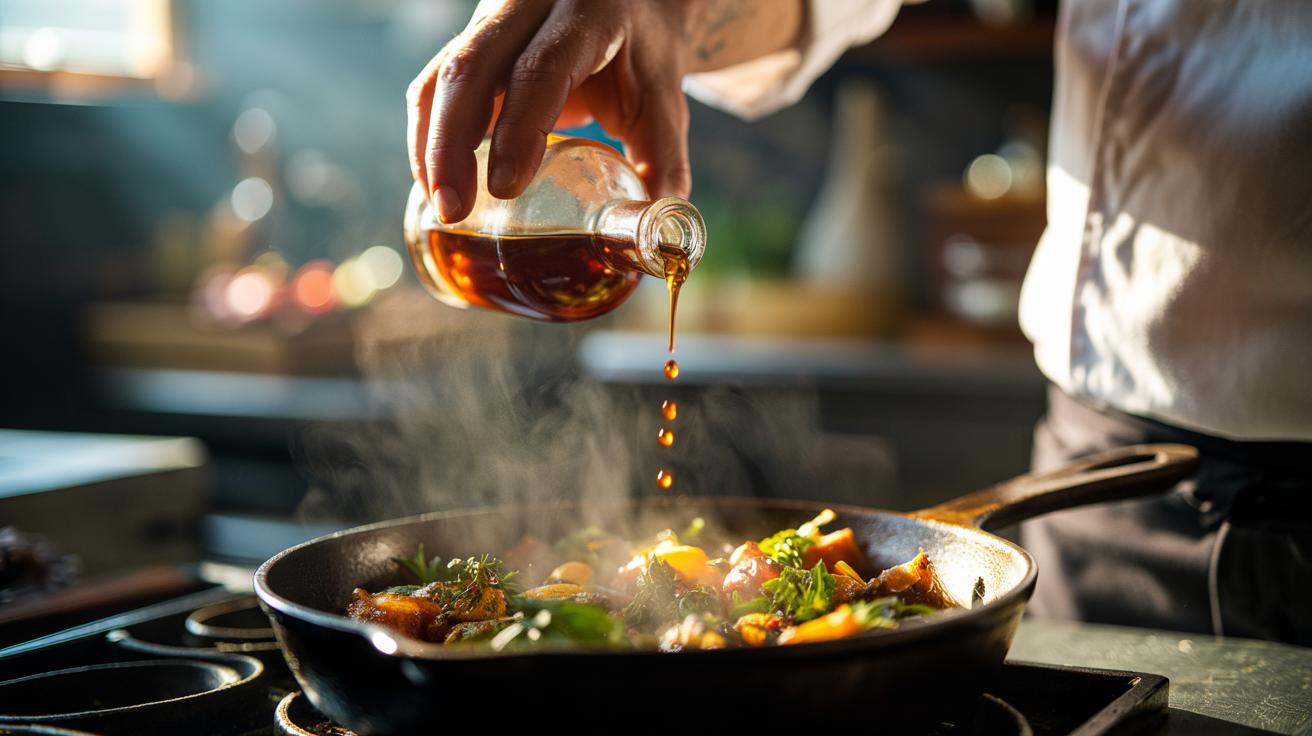
Vinegar is the quiet fixer in the kitchen, the sharp whisper that turns muddled, heavy flavours into something clean and vivid. One teaspoon, sometimes a mere splash, and a stew relaxes, a salad sings, a sauce finds its edge. That’s because acidity doesn’t add one note so much as it tunes the whole chord. It nudges salt, sweet, fat and umami into harmony, fast. In seconds. Used well, it can rescue over-salted soups, cut greasiness, and coax aroma molecules to bloom. Think of vinegar as the quickest way to balance a dish without masking what’s already good. Reach for it when your food tastes flat, tired, or strangely loud.
The Science of Acidity and Balance
Acidity is the palate’s reset button. By lowering a dish’s pH, vinegar heightens perceived saltiness, reins in bitterness, and brightens sweetness, which is why even desserts benefit from a stealthy splash. It stimulates salivation, literally making food feel juicier. Aromas seem louder because volatile compounds release more readily in a slightly acidic environment. Acid makes flavours pop instantly. That instant pop matters in everyday cooking: a drizzle of red wine vinegar at the end of a slow-cooked ragu helps separate its layers, so the tomatoes taste fresher and the meat tastes more savoury, not heavier.
Balance lives where acid, fat, salt and heat meet. Vinegar checks richness from butter and cream without erasing them; it lifts roasted, Maillard-heavy flavours when they verge on dulled brown. Add it late for maximum brightness, early for a gentler, rounder effect. It even alters texture: a little acid keeps vegetables vivid and crisp, while too much can toughen pulses during cooking. The trick is micro-dosing and tasting. Season in stereo: salt, then acid, then reassess. This is not fancy gastronomy—just the fastest way to make dinner taste intentional.
Choosing the Right Vinegar for the Job
Not all vinegars taste equal. Their origins—wine, grain, fruit—determine aroma and punch. Distilled white is clean and assertive; cider is fruity and approachable; sherry is nutty and complex; balsamic is luscious, with caramel depth. Rice vinegar is soft and floral. Malt carries toasty warmth. The acidity typically ranges from 4% to 7%, affecting sharpness and how fiercely a vinegar cuts through fat. The right bottle does most of the work for you. If in doubt, match the vinegar to the cuisine or the main ingredient: wine vinegars for Mediterranean fare, rice vinegar for Asian-leaning plates, malt with fried foods.
| Vinegar | Typical Acidity | Flavour Notes | Best Uses |
|---|---|---|---|
| Distilled White | 5–7% | Clean, sharp | Pickling, deglazing pans, rescue for salty soups |
| Apple Cider | 5% | Fruity, mellow | Slaws, chutneys, pork glazes, vinaigrettes |
| Red Wine | 6% | Robust, vinous | Dressings, tomato sauces, lentils |
| Sherry | 7% | Nutty, complex | Pan sauces, roasted veg, stews |
| Balsamic | 4–6% | Sweet-sour, syrupy | Finishing, strawberries, cheese, reductions |
| Rice Vinegar | 4–5% | Delicate, floral | Sushi rice, quick pickles, light dressings |
Quality matters. Aged, traditionally made balsamic should be used sparingly as a finishing touch; the cheaper, “condimento” style is fine for cooking. Sherry vinegar rewards you with restaurant-level complexity in one spoonful. Keep two everyday options—cider and red wine—and one special bottle for flair. Choose the vinegar that complements the dish, not just cuts through it. When substituting, match intensity first: swap rice vinegar with cider (add a pinch of sugar), or red wine for sherry (use a touch less).
Quick Fixes: Vinegar Tricks for Everyday Dishes
Flat soup? Add half a teaspoon of distilled or cider vinegar, stir, and taste again. Over-salted broth? A splash of vinegar plus a little water can recalibrate it faster than potatoes ever will. Rich stews come alive with sherry vinegar right before serving. For roasted vegetables, a drizzle of red wine vinegar and a pinch of salt turns caramelised edges into something vivid. When food tastes flat, add acid, not more salt.
Greens love vinegar. Toss kale with a cider vinegar dressing and watch it soften. Spinach wilts with a quick splash in the pan. Coleslaw? Use half mayo, half vinegar-based dressing for brightness that lasts. Try instant pickles: thinly slice cucumber, add rice vinegar, salt, sugar, and let sit 10 minutes. They cut through fried chicken like a knife through fog. A few drops of balsamic on strawberries? Dessert, redefined.
Eggs and fish need finesse. Poaching water with a teaspoon of white vinegar sets whites fast. For oily fish, finish with lemon and a lick of rice vinegar. Pan sauces love vinegar: deglaze with red wine vinegar, reduce, then whisk in butter. That’s a weeknight gastrique without faff. Tiny doses, big difference—measure with a spoon, finish with your palate.
Techniques for Cooking With Vinegar
Timing is everything. Add vinegar early to melt into a sauce; add late to keep edges bright. Deglaze hot pans with a tablespoon of wine or sherry vinegar to lift fond, then reduce by half for depth without harshness. For a classic vinaigrette, start at 3:1 oil to acid, then adjust—peppery leaves like rocket can handle 2:1, while delicate lettuce leans back to 4:1. Salt the vinegar before whisking in oil so the crystals dissolve properly. Taste, then tweak with vinegar until the dish snaps into focus.
Respect reactions. Avoid long acidic marinades with delicate proteins: fish, 20–30 minutes; prawns, 15; chicken, 30–90; beef, up to 2 hours. Too long and textures toughen. Use non-reactive bowls (glass, ceramic, stainless steel). Be gentle with dairy—stir vinegar into cream sauces off the heat to prevent curdling, or temper with a splash of stock. Reduce balsamic patiently and stop before syrup turns sticky and bitter. For finishing, a spritz bottle of cider or sherry vinegar gives even distribution. Emulsions break? Whisk in a teaspoon of vinegar to revive. Cook with confidence: acidity is a tool, not a hazard.
Vinegar is the swiftest route to clarity, the edit button for muddled plates and tired leftovers. It doesn’t shout; it points, brightens, and balances, giving you control over flavour in real time. Keep a few bottles within reach, learn their edges, and season in small, deliberate steps. Your palate will tell you when you’ve arrived. Once you start finishing dishes with acid, it’s hard to stop. Which vinegar will you experiment with first this week, and what dish are you going to transform with a single, well-aimed splash?
Did you like it?4.6/5 (30)