In a nutshell
- 🍚 Use a loose foil tent to manage controlled steam and prevent condensation drip, transforming clumpy rice into fluffy, distinct grains.
- 🧪 Understand causes: excess surface starch and cold-storage retrogradation bind grains; the foil method gently relaxes starch without soaking.
- 🧭 Step-by-step recovery: vent, lightly fluff, then rest under a foil dome (8–10 minutes fresh; 12–15 minutes in oven for leftovers with a light mist).
- ⚙️ Device-specific fixes: rice cooker (vent, fluff, tent on warm), pressure cooker (quick-release, bowl rest under foil), microwave (no foil inside; heat covered, then foil-tent off-appliance).
- 📏 Pro tips and ratios: rinse well, keep honest water ratios, add a little oil and salt, rest under foil, then fluff gently; a simple table guides basmati, jasmine, short-grain, and leftovers.
Claggy rice happens to the best of us. One moment you’re picturing fragrant, restaurant-quality grains that tumble apart; the next you’re staring at a gluey mound. Here’s the fix: a simple foil tent. This low-effort trick harnesses steam, controls condensation, and coaxes grains back to life without a splash of extra water. It works for fresh pots that skew sticky and for leftovers that set firm in the fridge. Use foil to redirect steam softly, not smother the rice. With a few measured moves, you’ll lift clumps, restore shine, and revive texture. No gadget shopping. No waste. Just smart heat management and a sheet of kitchen foil.
Why Rice Clumps—and How Foil Helps
Rice turns claggy when surface starch washes into the pot and gelatinises, binding grains as they jostle. Stir too aggressively, add a shade too much water, or skip a rinse, and those fine starch layers become glue. Leftovers bring a different demon: as rice cools, starch retrogradation sets in, tightening structure so grains stick in cold, compacted clusters. Heat alone often overcorrects, driving more moisture into the surface and compounding stickiness. The solution is controlled steam and controlled condensation.
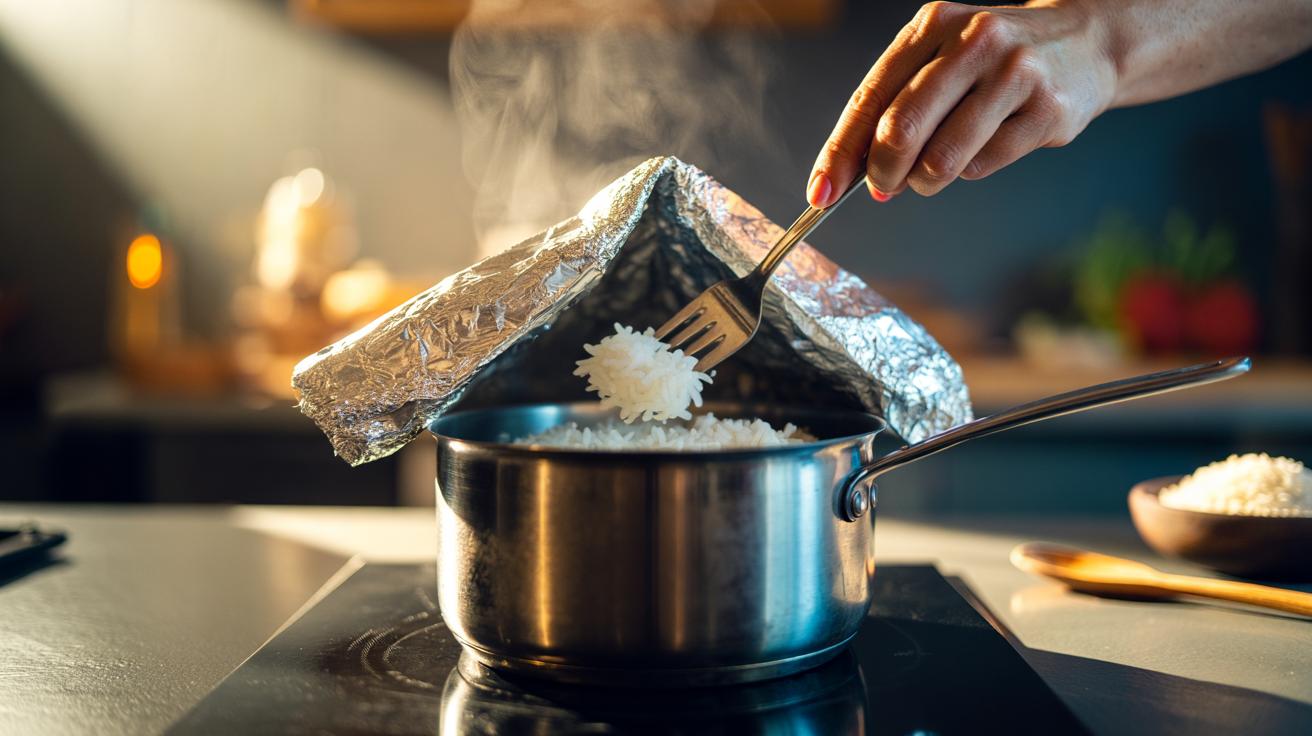
A loose foil tent gives you both. The tent traps just enough carryover steam to relax starches and separate grains, but—crucially—its sloped surface channels droplets away from the rice. No rainback. No sog. The light enclosure also stabilises temperature, so you’re not blasting the top layer while the core sits cold. Think of foil as a micro-hood: it refracts heat gently, prevents excess evaporation, and resists droplet drip. By managing steam flow rather than drowning the pot, you reclaim fluff without wrecking structure.
Step-By-Step: The Foil Fluff Method
Freshly cooked but sticky? Kill the heat and vent the pot lid for 60 seconds to stop active simmering. Slide in a fork or paddle, lift gently from the sides, and break obvious clumps without mashing. Drape a sheet of foil over the pot, crimped loosely at the rim to form a roomy dome. Replace the lid on top of the foil, leaving a small gap at one edge. Sit for 8–10 minutes. The tent traps moderate steam while letting excess escape. Lift the lid, peel back the foil away from you, and fluff again. This calm rest period lets grains set distinct and glossy.
Clumpy leftovers? Spread rice in a shallow layer in an oven-safe dish. Mist lightly with water—2 to 3 teaspoons per packed cup. Cover with a loose foil tent, edges crimped but not airtight. Warm at 150–160°C for 12–15 minutes. The gentle heat relaxes retrograded starch without soaking the exterior. For stovetop recovery, warm a heavy pan on low, add rice, mist, then foil-tent the pan and cover with a lid cracked open. Five to eight minutes does it. Break clumps with a fork in stages. If you hear vigorous sizzling, the heat is too high.
Quick Fixes for Different Cookers
Rice cooker owners: when the switch flips to warm, vent the lid for 30 seconds to release excess moisture. Fluff once, then lay a loose foil tent directly over the rice pot and close the cooker lid on top. Rest 7–10 minutes on warm. The foil curbs lid condensation dripping back and evens the top layer, which is prone to drying while the bottom stays moist. For pressure cookers: quick-release, spread rice into a bowl, fluff, and tent with foil off-heat for 5 minutes to equalise steam without further cooking.
Microwave reheats require care. Don’t put foil inside. Instead, place rice in a glass bowl, sprinkle a teaspoon of water per cup, and cover with a microwave-safe plate. Heat in short bursts until hot. Now transfer to the counter and tent with foil for 3–4 minutes. That off-appliance tent converts trapped heat into gentle steam without spattering. On the hob, a non-stick pan over low heat works wonders: mist, cover with a foil dome plus lid, then fluff in two passes. Small amounts of water, not a pour, make the difference between fluffy and sodden.
Pro Tips, Ratios, and a Simple Table
Technique begins before the foil. Rinse long-grain rice until water runs mostly clear to remove surface starch that causes gluey coats. Keep your water ratios honest, and resist stirring mid-simmer; agitation scrapes starch into the broth. A teaspoon of neutral oil per cup can reduce sticking without greasiness. Salt? Absolutely—about 1/4 to 1/2 teaspoon per cup of raw rice enhances flavour and helps proteins tighten slightly on the grain surface. After cooking, rest under a foil tent to manage condensation, then fluff with a wide, shallow scoop. Steam separation, not muscle, creates distinct grains.
| Rice Type | Water per 1 Cup Rice | Foil-Tent Rest | Common Clumping Cause | Quick Fix |
|---|---|---|---|---|
| Basmati | 1.5–1.75 cups | 8–10 minutes | Over-stirring, no rinse | Rinse well, tent post-cook |
| Jasmine | 1.25–1.5 cups | 7–9 minutes | Too much water | Vent, fluff, tent to dry |
| Short-Grain | 1.1–1.25 cups | 10–12 minutes | High amylopectin | Gentle fluff, longer rest |
| Leftovers | 2–3 tsp misting | 3–5 minutes | Retrogradation | Reheat gently, foil-tent |
For fried rice, cool cooked grains spread on a tray, then store chilled. Reheat briefly, foil-tent 2 minutes, and proceed to the wok—dry, bouncy, separate. If your lid drips, pop a paper towel under it and add a foil dome above the rice to keep the towel off the food. The dual barrier diverts condensation while preserving steam. Think balance: enough moisture to relax starch, not enough to pool. That is the philosophy behind every professional pot of rice—quiet heat, patient rests, and a deft final fluff.
With nothing more than foil and timing, you can convert clumps into supple, distinct grains that look and taste like a chef cooked them. The method is forgiving, quick, and repeatable, whether you use a humble saucepan or a high-tech cooker. The changes are subtle—lighter steam, less drip, a gentler rest—but the result is striking. Once you feel how easily grains loosen, you won’t go back. What dish will you celebrate first with your newly fluffy rice: silky katsu curry, a zesty pilaf, or tomorrow’s wok-charred fried rice?
Did you like it?4.5/5 (25)