In a nutshell
- 🍕 Mimic a pro deck with heavy-duty foil over an inverted baking tray for fast conduction, radiant reflection, and a shatter-crisp base.
- 🔥 Heat strategy: preheat to 250–270°C for 25–35 minutes, par-bake the base 2–4 minutes, then finish under the broiler/grill for 60–90 seconds.
- 💧 Moisture control: use low-moisture mozzarella, keep toppings light, dust foil with semolina, dock the centre, and rest baked pizza on a wire rack to vent steam.
- 🧰 Troubleshooting: raise rack if the base burns, shorten par-bake, switch to 18-micron foil to prevent tearing, or boost heat with a second tray or upside-down cast-iron.
- 🥖 Dough and flavour: aim for 60–65% hydration, do a 12–24 h cold ferment, add a touch of sugar/malt for browning, and lightly oil the rim for colour.
Craving that shattering, pizzeria-style crunch without a stone or steel? You can hack it with heavy-duty foil and smart heat management. The principle is simple: maximise contact, minimise moisture, and use your oven’s hottest settings for a short, decisive bake. Heat and contact are everything. With a crimped sheet of heavy-duty foil acting as a flexible, heat-reflective surface, you’ll mimic the speed of a professional deck. There’s no special gear to buy, just a baking tray and a few kitchen habits. Ready in minutes, this method rewards fresh dough, tidy toppings, and proper preheating with a crackly base and tender crumb.
Why Foil Works for Crispy Crust
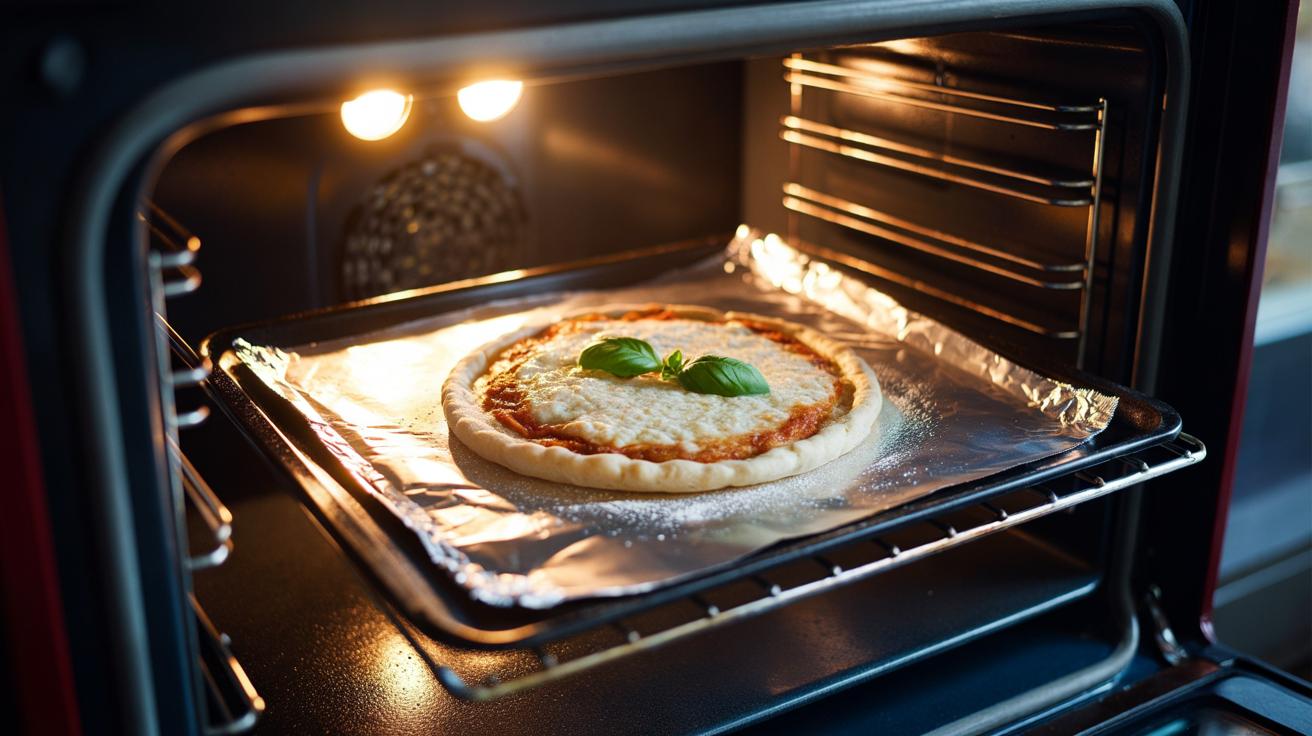
Commercial pizza ovens deliver two things home kitchens lack: roaring heat and hard, hot decks that make instant contact with dough. A sheet of heavy-duty aluminum foil, pressed flat over an inverted baking tray, approximates that deck by creating a thin, highly conductive surface. It heats fast, reflects radiant energy back into the base, and—thanks to the tray beneath—stays hot when cold dough lands. That immediate sizzle seals the underside, trapping steam inside the crumb while the exterior dehydrates to glassy crispness. It’s a pragmatic workaround that respects physics, not just folklore.
Texture relies on water management. Foil helps you control it. Oiled foil resists sticking, while a dusting of semolina or fine polenta acts like ball bearings, boosting airflow and reducing sogginess. Crucially, a short par-bake before saucing lets moisture escape from the dough rather than soak into it. Many home bakers fear the tomato’s acidity on foil; that’s sensible. Par-baking first means the sauce sits on a sealed layer, not raw metal. Use heavy-duty foil and keep direct contact with acidic toppings brief to avoid off-flavours or pitting.
Heat delivery matters just as much as ingredients. Convection fans drive hot air onto every edge of the crust, while the foil reflects infrared energy to the base. The upside-down tray provides a flat, rimless “deck” so you can launch and retrieve cleanly. For finishing, a quick broiler/grill blast sets top browning without softening the bottom. That two-zone strategy—blister below, colour above—creates the coveted balance: crisp underside, airy rim, molten top. Think of foil as a nimble, disposable steel—lightweight, cheap, and surprisingly effective for weeknight pizza.
Step-By-Step: Foil Method for Pizzeria-Level Crisp
Preheat is non-negotiable. Set your oven to 250–270°C (480–520°F), convection if you have it, with a heavy baking tray placed upside down on the middle rack. Give it 25–35 minutes to saturate. Meanwhile, tear a sheet of heavy-duty foil larger than your pizza, crimping a firm 1 cm rim for rigidity. Brush lightly with oil, then dust with semolina. Stretch a 230–280 g dough ball to 10–12 inches on the foil, keeping a thicker rim. Dock the centre with a fork to curb bubbling. Slide the foil (with dough) onto the blazing tray.
| Step | Setting | Time | Purpose |
|---|---|---|---|
| Preheat | 250–270°C, tray inverted | 25–35 min | Heat saturation |
| Par-bake base | Same, convection on | 2–4 min | Set underside, drive off moisture |
| Top and bake | Same | 5–7 min | Crisp bottom, cook crumb |
| Finish | Broiler/grill | 60–90 sec | Rapid top browning |
After the 2–4 minute par-bake, remove the tray, lift the foil with care, and add restrained toppings: 2–3 tbsp sauce, well-drained low-moisture mozzarella, and thin-cut ingredients. Excess water sabotages crispness. Return the pizza on its foil to the hot tray for 5–7 minutes. When the underside is mottled and firm, switch to the broiler for 60–90 seconds. Preheat thoroughly, par-bake before saucing, and keep toppings light—these three rules deliver snap without dryness.
To serve, slide the pizza off the foil onto a rack for two minutes so steam escapes. For reheating slices, place directly on fresh foil over the hot, inverted tray at 230°C for 4–6 minutes, then a short broil. If you’re cautious about acid contact, par-bake on foil, then move the set base to parchment for topping and final bake; the bottom stays crisp because it’s already sealed.
Troubleshooting and Pro Tips
If the centre is soggy, your dough or toppings were too wet. Pat mozzarella dry, seed tomatoes, and avoid oil-heavy vegetables unless pre-roasted. A thinner, wider stretch helps moisture evaporate. If the base burns before the top colours, raise the tray one rack and shorten par-bake by 30–45 seconds, then finish under the broiler. Control water first; adjust heat position second. Foil tearing? Switch to heavy-duty (at least 18 microns), crimp a sturdier rim, and lift with two hands by the edges.
Weak oven? Use a two-tray boost. Preheat a second inverted tray on a higher rack; launch on the lower tray for base crisp, then swap to the upper tray for extra top heat. Or preheat a dry cast-iron skillet upside down and lay the foil on it for superior thermal mass. Aim for dough hydration around 60–65% for easy handling and a crisp yet open crumb. Semolina or fine cornmeal under the base is insurance; it lifts the dough microscopically, promoting airflow and preventing gluey spots.
Flavour counts. A 12–24 hour cold ferment builds depth and browns faster, meaning better crunch at lower risk of scorching. Don’t oversauce. Two tablespoons spread thinly beats a ladle. For leopard spotting, add a teaspoon of sugar or diastatic malt to the dough, or brush the rim lightly with olive oil before the broil. Finally, rest the baked pizza on a wire rack for a minute before slicing. That pause preserves the brittle bottom you worked for, keeping it crisp from first bite to last.
With a sheet of foil and a fierce preheat, your home oven can channel the spirit of a deck oven—fast, focused, and dry. The method is forgiving, cheap, and quick enough for weeknights, yet precise enough to please purists. Keep it light on sauce, diligent on heat, and intentional about moisture. Soon, you’ll hear that telltale crunch when the wheel cuts through. What twist will you try first: a white pie with garlicky ricotta, a classic margherita, or a crackly bianca crowned with rosemary and potato?
Did you like it?4.5/5 (25)