In a nutshell
- 🧪 The acetic acid in vinegar lowers surface pH and reduces moisture, creating a hostile zone for spoilage microbes and slowing mould growth without muting flavour.
- 📝 Step-by-step: mix 1:3 vinegar:water, lightly wipe exposed cheese surfaces, wrap in wax/cheese paper, store in a loosely closed container in the fridge (1–5°C), and reapply every 2–3 days.
- 🧀 Best candidates: Cheddar, Parmesan, Gruyère, Gouda thrive with the vinegar wipe; use sparingly on fresh cheeses; avoid on bloomy rinds and blue cheeses.
- 📈 Results: expect extended shelf life—hard cheeses from ~7–10 to 14–21 days, semi-hard to 10–14 days, with cleaner texture and steadier flavour, cutting food waste.
- ⚠️ Safety first: bin cheese with black mould, pink slime, or ammoniac odours; when in doubt, trust sight and smell.
Home cooks whisper about it like a family secret: a splash of vinegar that keeps cheese fresher for far longer than the packet promises. It sounds quaint, almost old-fashioned. Yet it rests on modern food science. The acidity of vinegar creates a hostile environment for spoilage microbes, helping stave off mould, slime and off odours. The trick isn’t to soak or overwhelm the cheese but to build a protective microclimate. Done right, the result is simple: less waste, better flavour, more time. Used correctly, a light vinegar barrier can extend the life of many cheeses without leaving a noticeable tang. Here’s how and why it works.
Why a Splash of Vinegar Changes Cheese’s Fate
Cheese is a living, breathing food. On its surface, ambient bacteria and moulds compete for space and moisture. Vinegar’s active component, acetic acid, lowers surface pH just enough to discourage opportunists without stripping the cheese’s character. Most spoilage microbes slow dramatically below pH 5.5; many common vinegars hover around pH 2–3. A faintly acidic film tilts the battlefield. That small shift in pH is often the difference between white fuzz in four days and a clean rind after a fortnight.
There is also a physical effect. A lightly damp vinegar cloth reduces surface moisture, the fuel that microbes crave, while allowing the cheese to breathe. Think of it as a breathable raincoat rather than shrink-wrap. The aim is control, not suffocation. When paired with proper wrapping and chilled storage, this creates a micro-environment that favours the cheese’s native cultures and disfavors invaders. Result: a slower march toward slime or bitterness, and a longer stretch of peak flavour.
How to Use the Vinegar Method Step by Step
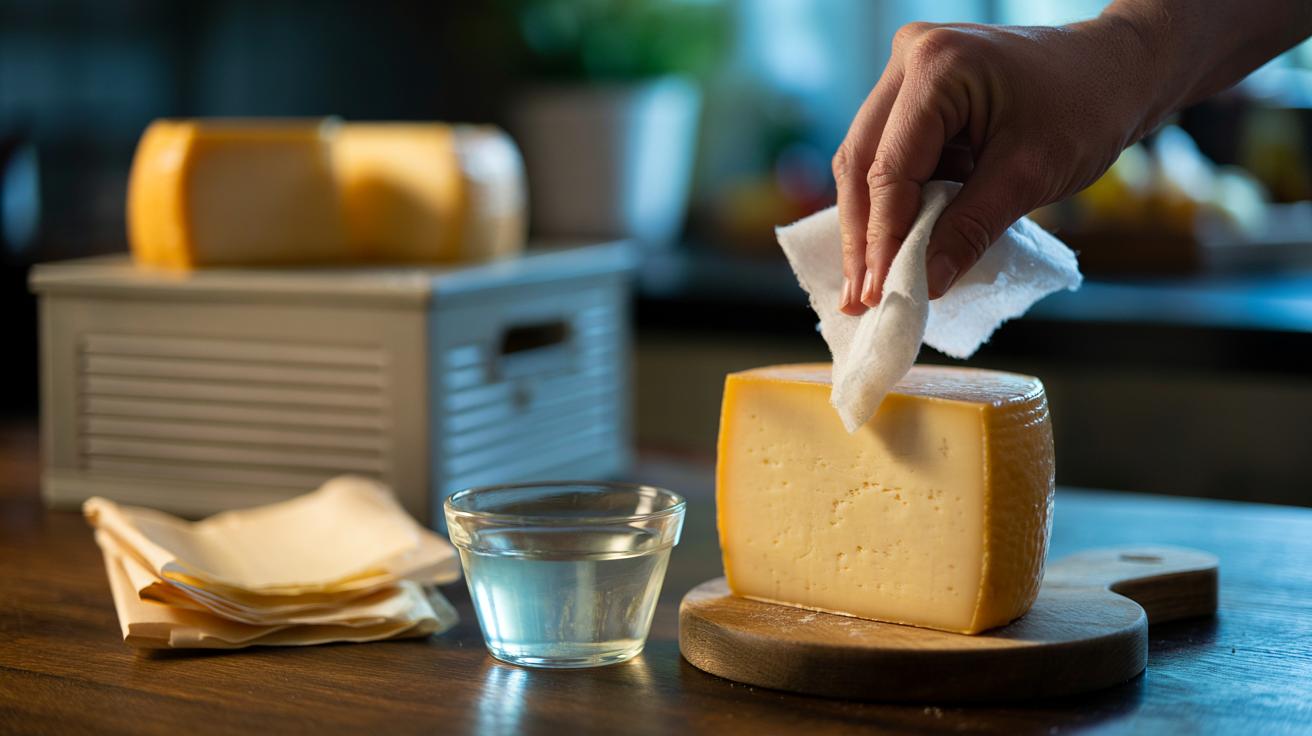
Start with clean hands and a clean board. Mix a 1:3 solution of vinegar to cold water in a small bowl. White wine vinegar or distilled white vinegar are reliable; cider vinegar also works but may impart a faint aroma. Dip a fresh, lint-free cloth or sturdy kitchen paper into the solution and wring it until just damp. Lightly wipe the cheese’s cut surfaces and any exposed sides. You’re aiming for a whisper-thin sheen, not a bath. Do not submerge cheese in vinegar or saturate rinds—over-wetting invites damage.
Let the cheese air for one minute. Wrap it in wax paper or breathable cheese paper; avoid plastic clinging directly to the surface. Then place the wrapped cheese in a loosely closed box or container in the fridge’s vegetable drawer, which offers steadier humidity. Reapply the wipe after each use, trimming dried edges before re-wrapping. For most households, that means a quick dab every two to three days. Always keep cheese refrigerated at 1–5°C, and discard anything with black mould, pink slime, or a sour, ammoniac smell.
Which Cheeses Benefit Most—and Which Don’t
The vinegar wipe favours firm, low-moisture styles. Cheddar, Parmesan, Gruyère, and many semi-hard cheeses like Gouda or Comté respond beautifully. These have sturdy matrices and fewer crevices for moisture to pool, so a little acidity buys a lot of time. Fresh cheeses—feta, mozzarella, ricotta—are trickier; their high water content and delicate proteins mean vinegar can tip flavour quickly. It may still slow surface mould, but the payoff is smaller and the risk of tang higher.
Some cheeses are best left alone. Bloomy rinds such as Brie and Camembert rely on a living white mould you actually want. A vinegar wipe can stress or kill it, flattening aroma and disrupting ripening. Avoid vinegar on blue cheeses like Stilton or Gorgonzola; it can disturb the beneficial blue flora and smear the paste. Washed-rind cheeses (think Époisses) already carry a managed microbial community shaped by brine or alcohol—vinegar throws the balance off. Use good wrapping and airflow instead.
| Cheese Type | Vinegar Wipe? | Notes |
|---|---|---|
| Hard (Cheddar, Parmesan) | Yes | Best results; minimal flavour impact |
| Semi-hard (Gouda, Gruyère) | Yes | Helps curb surface mould |
| Fresh (Mozzarella, Ricotta) | Maybe | Use lightly; watch for tang |
| Bloomy rind (Brie, Camembert) | No | Preserve beneficial rind flora |
| Blue (Stilton, Gorgonzola) | No | Vinegar disrupts blue mould |
Taste, Texture, and the Food Waste Equation
Used sparingly, a vinegar wipe leaves little to no detectable flavour. Any residual acetic acidity evaporates quickly, especially with a breathable wrap. Texture often improves: fewer wet patches, less slimy rind, cleaner cuts. The larger impact shows up in bin statistics. A block of family Cheddar that might dry out or sprout mould in a week can remain enjoyable for two to three, sometimes longer, if you maintain the wipe-and-wrap routine and trim sensibly. The technique doesn’t resurrect tired cheese; it slows decline, buying time to enjoy what you paid for.
Expect conservative gains, not miracles. Typical home results look like this: hard cheeses extend from roughly 7–10 days after first cut to 14–21 days; semi-hard from 5–7 days to 10–14 days; fresh cheeses gain only a few days at most. Combined with smart habits—cool transport, prompt refrigeration, dedicated container—those numbers stack up. Less waste, steadier flavour, more value. If in doubt, trust your senses: clean scent, no oozing, and intact colour signals safety. When aroma turns harsh or the rind shows black or vivid orange growth, it’s time to part ways.
This low-tech, low-cost trick owes its success to simple chemistry and sensible storage. It doesn’t replace proper cheese paper, good refrigeration or regular trimming; it supercharges them. For many British kitchens, it’s the difference between a forgotten wedge consigned to the bin and a weeknight toastie that still sings. Handled lightly, vinegar preserves character while pushing back the clock on spoilage. Will you test the wipe-and-wrap on your next Cheddar, or does a different preservation hack deserve a place on your fridge shelf?
Did you like it?4.5/5 (21)