In a nutshell
- 🥔 The science: a little rice adds amylopectin for plush, stable creaminess in mashed potatoes, especially with Maris Piper or King Edward; it’s naturally gluten-free.
- ⚖️ Ratios and types: per 1 kg potatoes, use 40–60 g cooked rice or 10–12 g uncooked; Arborio/short-grain = ultra-creamy, basmati = lighter, fluffier finish.
- 🛠️ No-fail method: keep everything hot; use a potato ricer or masher (never a blender); add butter first, then hot milk, then the rice component; stop when it turns glossy.
- 📊 Quick reference: a simple table outlines best rice types, exact ratios, texture outcomes, and flavour notes for easy selection.
- 🔁 Make-ahead and twists: holds well for service, reheats smoothly, freezes in portions; flavour with roasted garlic, miso, or go dairy-free with olive oil and warm oat milk.
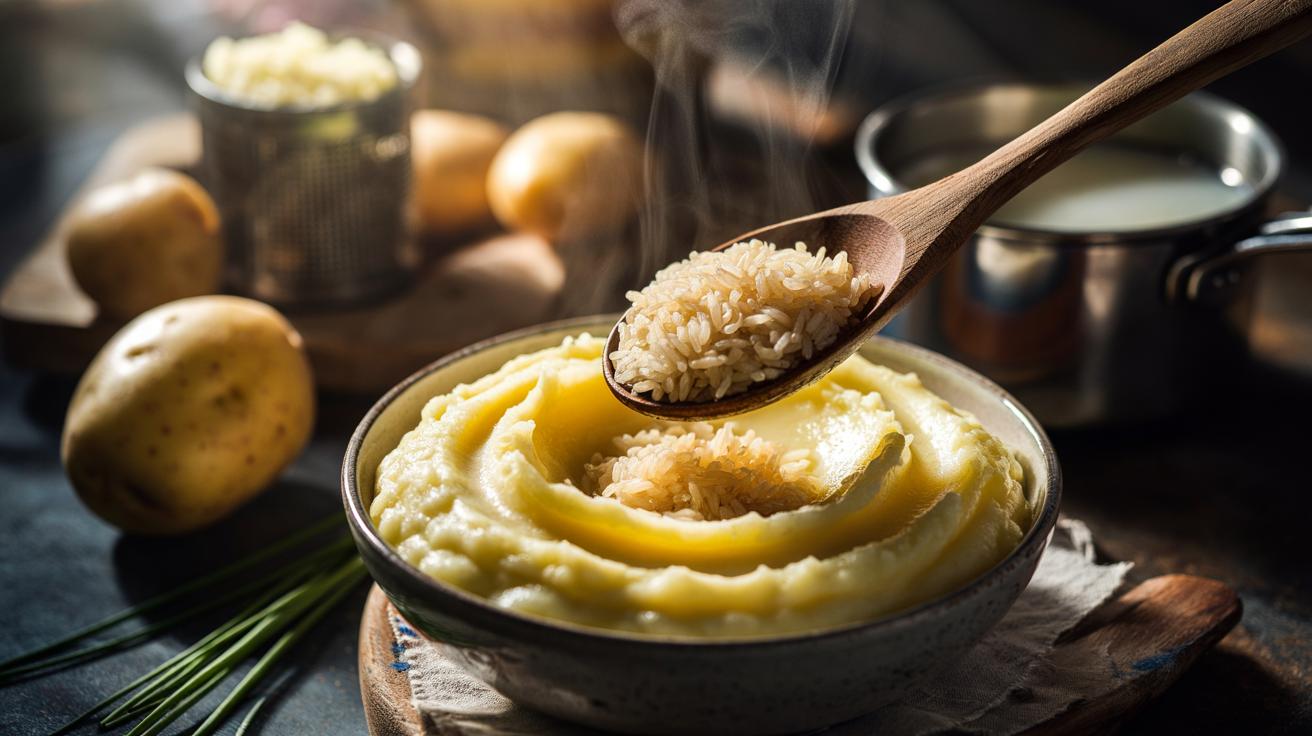
There’s a low-effort trick that transforms mashed potatoes from pleasant to restaurant-smooth: rice. Not piles of it. Just enough to lend delicate body and silk. Rice is rich in friendly starches that bind stray moisture, raising the mash’s viscosity without heaviness. The result? A spoon-coating, glossy puree that stays fluffy as it cools and reheats beautifully. It tastes like potato, not paste. It feels indulgent yet light. And it’s almost impossible to mess up. With a spoonful of the right rice, your mash becomes creamier, steadier, and more forgiving. Here’s how to fold this simple upgrade into your weeknight routine, and why it works so reliably.
The Science Behind Rice-Boosted Creaminess
Classic mashed potatoes can swing from watery to gluey because potato cells release starch unevenly as they’re cooked and mashed. Rice brings order. Short- and medium-grain rice carry more amylopectin, the branchy starch that swells and suspends water, giving a plush, velvety mouthfeel. A little of that starch integrates with the potato’s own, creating a stable emulsion with butter and milk. The payoff is a mash that holds on the plate yet feels cloud-soft on the tongue. Choose potatoes with mid-to-high dry matter—Maris Piper or King Edward—and you’ll amplify the effect, because their cells break down into a fine, even crumb that rice starch can easily coat.
Here’s the big advantage: rice starch thickens at lower concentrations than potato starch, so you need only a small amount. That means pronounced potato flavour remains intact. The rice doesn’t shout. It whispers support. Think of it as scaffolding: invisible once the structure stands, but vital to how it stands. Even better, the rice limits weeping on the plate and during reheating, keeping mash glossy without doubling the butter. It’s an elegant, gluten-free way to build body.
Ratios, Rice Types, and the Easiest Method
The method is flexible. Use cooked rice you already have, or simmer a spoonful alongside your potatoes. The golden ratio is simple: for every 1 kg potatoes (peeled weight), add 40–60 g cooked rice, or 10–12 g uncooked rice simmered in the pot. That tiny dose is enough to lift texture dramatically. Short-grain options like arborio or sushi rice yield the most luxurious sheen, while basmati gives a lighter, drier finish for those who prefer airiness. You can blend the cooked rice with warm milk to make a quick “starch milk,” then fold it in, or just mash the rice directly with the potatoes.
| Rice Type | Ratio (per 1 kg potatoes) | Texture Outcome | Flavour Notes |
|---|---|---|---|
| Arborio | 50 g cooked or 10 g uncooked | Ultra-creamy, glossy | Neutral; amplifies butteriness |
| Sushi/Short-Grain | 60 g cooked | Plush, cohesive | Clean, slightly sweet starch |
| Basmati | 40 g cooked | Light, fluffy | Delicate aroma, drier feel |
To do it now: simmer potatoes in salted water until tender. In the final 10 minutes, add the measured uncooked rice in a mesh bag, or warm your cooked rice separately. Drain well. Mash potatoes, then fold in the rice (or whisked rice-milk blend) with hot butter and steaming milk. Stop as soon as it looks silky.
Tools, Timing, and a No-Fail Workflow
Success hinges on two ideas: control water, then add hot fat. First, keep everything warm. Cold dairy dulls flavour and tightens starch. Heat your milk (or stock) and butter until steaming. Let potatoes steam-dry for a minute after draining to shed surface water. If using uncooked rice in the pot, bag it so you can lift it out and mash separately; if using cooked rice, keep it hot. Warm ingredients marry; cold ones fight you.
For texture, use a potato ricer or a firm masher. A ricer yields a fine, professional crumb that drinks in rice starch evenly. A masher gives rustic charm. Either way, avoid blenders or stick mixers; they pulverise starch into glue. Stir in butter first, then hot dairy, finally the rice component. Taste for salt early—rice softens edges, so you may need a pinch more. If you overshoot, thin with a splash of hot milk. If it’s slack, stir in another spoon of warm cooked rice. Never overwork once it turns glossy; the moment it shines, you’re done.
Flavour Twists and Make-Ahead Strategies
Because rice adds structure without heavy cream, you can bend the mash toward your menu. For a roast, fold in roasted garlic and chives. With braised beef, whisk in a spoon of miso and a nub of horseradish. Going plant-based? Swap butter for extra-virgin olive oil and warm oat milk; rice starch keeps the texture plush even without dairy. The technique is a stealthy route to lighter, richer-tasting mash. For extra gloss, finish with a knob of butter or a drizzle of olive oil at the table.
Planning ahead is easy. Make the mash an hour early and hold it warm over a pan of gently simmering water, covered; stir in a splash of hot milk before serving. Refrigerated leftovers reheat smoothly in the microwave at 50% power, stirring once or twice; the rice prevents weeping and graininess. Freezing? Portion flat in bags, defrost overnight, then reheat with hot dairy. Leftovers thrive as shepherd’s pie topping, croquettes, or bubble and squeak. Rice gives stability, so the mash stays shapely yet tender when repurposed.
This small tweak pays off big. A handful of rice, a little heat discipline, and your mashed potatoes leap from weekday filler to table-stealing side. The flavour remains pure, the feel indulgent, the method repeatable. You gain creaminess you can count on, not just chase. Next time you peel spuds, keep a scoop of rice nearby, warm your dairy, and aim for that quiet, glossy sheen. Once you taste the difference, it’s hard to go back. What rice-and-potato pairing will you try first—ultra-lux arborio or feather-light basmati, and what will you serve alongside?
Did you like it?4.6/5 (21)