In a nutshell
- 🍳 Vinegar ensures clean coagulation: a splash lowers pH so whites set neatly; use 1–2 tbsp per litre for compact, tender results without sourness.
- 🔥 Control heat and time: keep water at 85–90°C (bare tremble), cook 2:30–4:00 minutes for runny to jammy yolks, never at a rolling boil.
- 🥚 Follow a precise method: use fresh eggs, crack into a ramekin, optionally strain thin whites, slide in gently (vortex optional), lift with a slotted spoon and drain.
- 🧂 Choose the right kit and vinegar: pick white distilled vinegar (or white wine), avoid malt; a wide, shallow pan and a thermometer make consistency easy.
- 🛠️ Troubleshoot and finish like a chef: wisps mean cooler water or low acidity; don’t salt the water; batch, chill, then rewarm; finish with hollandaise, brown butter, or chilli oil.
Poached eggs look simple. They aren’t. One minute you’ve got silky ovals; the next, stringy whites and a frustrated Sunday. There’s a fix, and it’s utterly reliable: a whisper of vinegar in the water. This isn’t a cheffy gimmick. It’s controlled science that spares you the heartbreak of messy pans and split yolks. With the right ratio, temperature, and timing, vinegar nudges the proteins to set where you want them, when you want them, delivering a neat, tender envelope around a molten centre. Used properly, vinegar guarantees consistency without making your breakfast taste sour. Here’s how, and why it works every single time.
The Science Behind Vinegar in Poaching
The secret is acetic acid, the active component in vinegar. Egg whites are mostly albumen proteins suspended in water. Heat alone will coagulate them, but gently lowering the water’s pH with vinegar makes those proteins bond more quickly and more tightly, which reduces feathery wisps and helps form a compact shape. Lower pH equals faster, cleaner coagulation. This is especially useful with supermarket eggs, which are often older and have looser whites.
There’s a balancing act. Too little acid and the effect is marginal. Too much and the whites can tighten unevenly, becoming rubbery or tangy. The sweet spot is small: around 1–2 tablespoons of white vinegar per litre of water, depending on egg freshness. Don’t worry about flavour. At this dilution, and with the brief cooking time, the vinegar’s taste disappears entirely. Vinegar doesn’t make eggs taste sour when used correctly. What it does is stabilise the white’s structure, keep the yolk centred, and shorten the time your egg needs in the pan, protecting that lush, runny core.
Step-by-Step Method for Consistent Poached Eggs
Use the freshest eggs you can find. Fresher eggs have tighter whites, which helps; vinegar then tidies the edges. Fill a wide, shallow pan with 6–8 cm of water. Add 1–2 tbsp of white vinegar per litre. Heat to a bare tremble—no rolling boils. You want 85–90°C: steam rising, tiny bubbles clinging to the pan, barely breaking the surface. Crack each egg into a ramekin. For ultra-neat results, tip the egg through a fine-mesh sieve to discard the thinnest white before returning it to the ramekin.
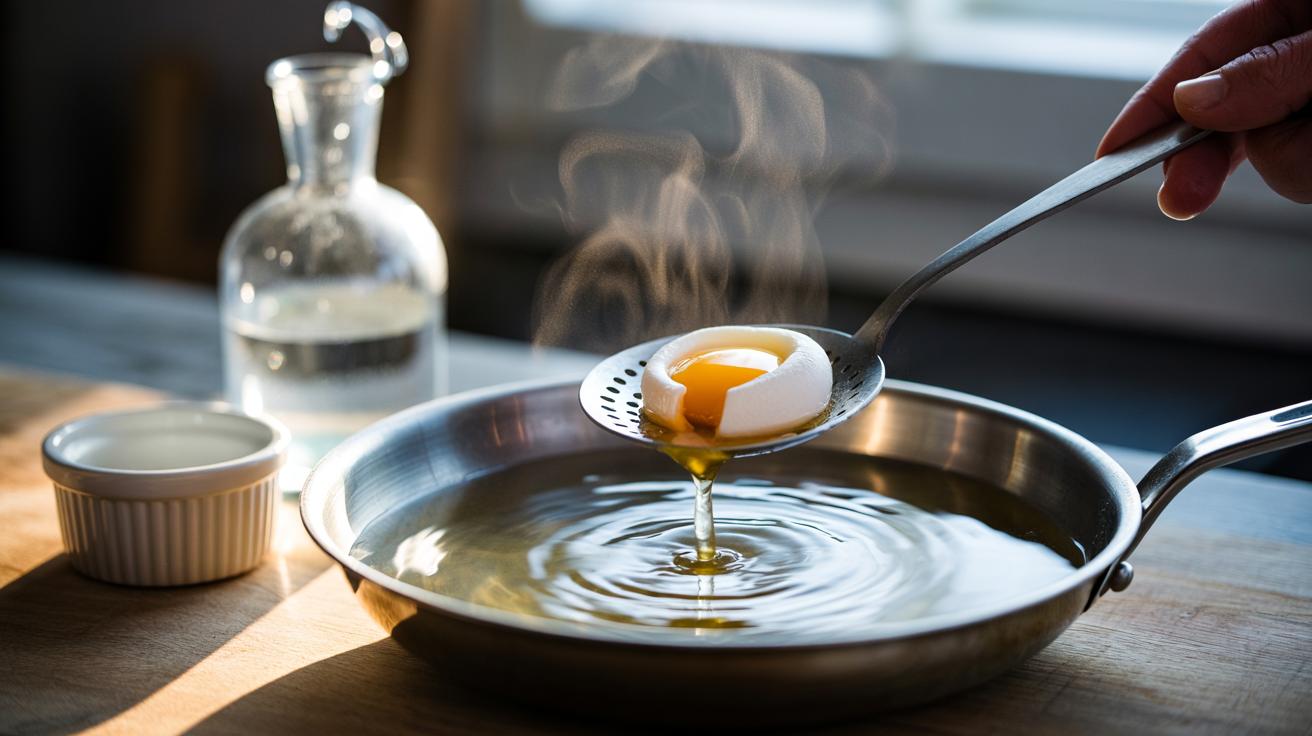
Stir the water gently to create a lazy vortex or, for multiple eggs, simply slide them in at the edge so they don’t collide. Lower the ramekin to the surface and tip the egg in one smooth move. Set a timer. For a runny yolk: 2 minutes 30 seconds to 3 minutes. For jammy: 3 minutes 30 seconds to 4 minutes. Scoop with a slotted spoon, dab dry on kitchen paper, and trim any stray frills if precision matters.
| Variable | Target | Notes |
|---|---|---|
| Water temperature | 85–90°C | Just a tremble, not a boil. |
| Vinegar ratio | 1–2 tbsp per litre | White/distilled works best |
| Cook time | 2:30–4:00 minutes | Shorter = runnier yolk |
| Pan depth | 6–8 cm | Enough to cushion the egg |
| Swirl | Optional | Useful for one egg at a time |
Choosing the Right Vinegar and Tools
Pick a neutral, clear vinegar. White distilled vinegar is the kitchen workhorse—clean flavour, consistent acidity, no colour transfer. White wine vinegar also plays nicely and brings a whisper of fruitiness if you insist. Avoid malt vinegar for poaching; it can tint the whites beige and leave a faint aroma you don’t want at breakfast. Apple cider vinegar can work in a pinch, but its amber hue and perfume are less discreet in the pan.
Tools matter. A wide, shallow sauté pan gives you control; a deep saucepan makes timing slippery as the egg sinks too far. Keep a slotted spoon for lifting, a fine-mesh sieve for straining watery whites, and small ramekins for clean transfers. Crack the egg into a ramekin, not straight into the pan. Temperature control is everything, so rely on visual cues or a thermometer if you have one. For brunch service or feeding a crowd, have a tray lined with kitchen paper ready to receive, and a kettle on standby to top up the pan if the level drops.
Troubleshooting and Chef-Level Finishes
If the water boils, stop and reset. Violent bubbles shred the white. If your egg spreads into wisps, either the water is too cool, the egg is too old, or the acidity is too low. Nudge the vinegar to the higher end of the range, and strain the egg before poaching. Cloudy water? That’s slightly overactive protein dispersing—harmless, but a sign to lower the heat or improve egg freshness. Don’t skip salting the egg after poaching, not the water. Salt in poaching water can loosen egg whites.
Cooking several at once? Slide eggs in clockwise, spaced apart, and set staggered timers. For service, shock poached eggs briefly in iced water to halt cooking, then rewarm for 30–40 seconds in hot (not boiling) water before plating. This trick gives you restaurant-level control without overcooking the yolk. Finish like a chef: glossy hollandaise for classic eggs Benedict; a drizzle of brown butter with capers and herbs; or a spoon of chilli oil and sesame for a brunch with bite. Season with flaky salt and freshly ground pepper; the clean, lactic brightness of a few drops of vinegar in the poach will make those flavours pop.
Consistency in poaching isn’t luck; it’s repeatable technique. The small addition of vinegar sets a professional baseline, while careful temperature and timing deliver restaurant-grade results at home. Keep the water calm, measure your acid, and respect the clock. Then elevate with smart finishes—sourdough toast, buttered spinach, or smoked salmon—to turn a quick egg into a small, perfect meal. Once you’ve felt the confidence of clean, tender whites around a runny yolk, you’ll never look back. What variation will you try first, and how will you make this simple method your own?
Did you like it?4.5/5 (25)