In a nutshell
- 🥬 Celery works as a natural humidifier, raising relative humidity to slow moisture loss and starch retrogradation, keeping loaves soft longer.
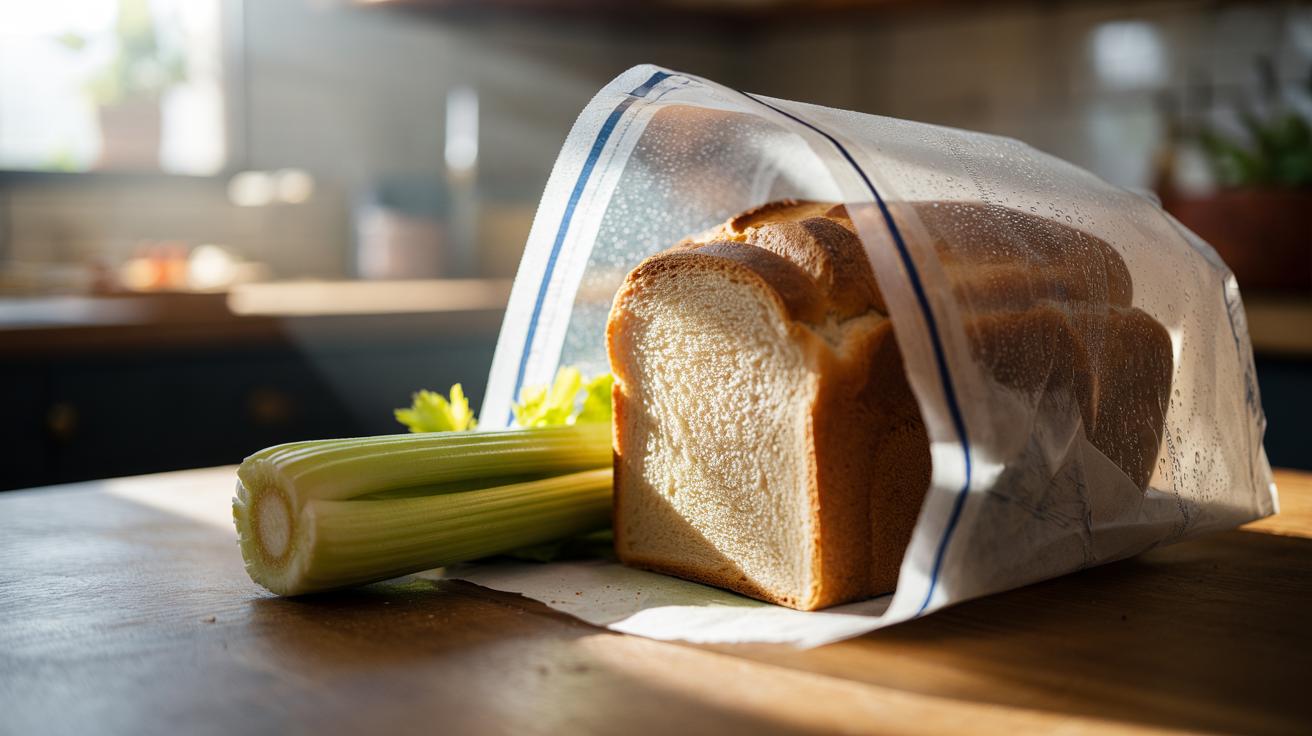
- 👩🍳 Practical method: cool the loaf fully, add a dry celery stick to the bag or bread box, seal lightly, and replace the stick every 24–48 hours.
- 🧪 Science in brief: controlled moisture migration and water activity preserve crumb tenderness without creating a gummy crust; flavour transfer is minimal.
- ⚠️ Safety and limits: this slows staling, not spoilage—discard at any sign of mould, avoid the fridge, and crisp the crust with a short oven refresh.
- ❄️ Smart strategy: pair short-term celery storage with long-term freezing; consider apple/potato/lettuce as cautious alternatives to maintain softness.
You’ve sliced into a gorgeous loaf. By tomorrow, it’s hard as a paperweight. There’s a quietly brilliant fix hiding in the crisper drawer: celery. This humble stick’s high water content turns your bread bag into a gentle, self-regulating humidity chamber. The result? A loaf that stays pleasantly soft without turning soggy or perfumed. In homes where a full loaf lingers for days, a sliver of celery can be the difference between toast and bin. A small botanical boost, and your bakery buy suddenly stretches across the week. Here’s the science, the method, and the limits that matter.
Why Celery Keeps Bread Soft
It sounds odd. It works. Bread goes stale because starches crystallise in a process called retrogradation, forcing moisture out of the crumb and into the crust, then the air. Celery, packed with water and a crisp matrix of cellulose, steadily releases vapour inside a bag or box. That vapour nudges the relative humidity upward, slowing the crumb’s dehydration. Celery acts like a living humidifier, easing the moisture gradient that pulls water out of bread. The loaf won’t reverse staleness instantly, but it will stall the slide.
Behind the kitchen trick sits moisture migration and water activity. Stale bread isn’t usually “dry”; its water is locked up in crystals. Higher ambient humidity reduces the driving force for water to leave the crumb, so fewer crystals form, and softness lingers. Celery’s structure releases moisture slowly, unlike a wet towel that can create condensation and stickiness. Gentle humidity means softer slices without a gummy crust.
Flavour transfer? Minimal. Celery’s aroma compounds are faint at low temperatures and dissipate quickly when toasting. In blind tastings, most people can’t distinguish a slice stored with celery from a fresh one. Practical, subtle, effective.
Practical Steps for the Celery Trick
Start with fresh, crisp celery. Wash, dry thoroughly, and cut a stick about the length of your palm. Slip it into the bread bag or box, keeping it near—but not pressed into—the cut face. Seal the bag lightly so air turnover is slow, not zero. Never add celery to warm bread; let the loaf cool completely to avoid condensation and mould. Replace the stick every 24–48 hours as it flaccidly donates its moisture. This method suits sliced tin loaves, sandwich bread, and soft rolls best.
Fridge? No. Refrigeration accelerates starch retrogradation, making bread taste stale faster, celery or not. For long-term keeping, freeze slices instead. For short-term softness at room temperature (18–22°C), celery shines. Worried about aroma? Pop the celery in a small, perforated paper envelope to moderate contact while maintaining humidity flow. Goal: a cushioned microclimate, not a swamp.
| Storage Method | Ideal Duration | Softness Outcome | Notes |
|---|---|---|---|
| Bag Alone (Room Temp) | 1–2 days | Moderate | Dries faster once opened |
| Bag + Celery | 2–3 days | High | Replace celery after 48 hours |
| Bread Box + Celery | 3–4 days | High, steady | Best balance of airflow |
| Freezer (Sliced) | Up to 3 months | Excellent after reheating | Wrap well to prevent frost |
Food Safety, Quality, and Limits
Soft isn’t the same as safe. The celery trick slows staling, not spoilage. If you see mould, discard the entire loaf—spores spread invisibly beyond the spot. Because humidity rises, the mould clock can tick faster in warm kitchens. Keep the setup cool, dry the celery before use, and avoid enclosing visible condensation. For enriched breads—brioche, milk loaves—monitor closely; higher sugar and fat can encourage quicker microbial growth.
Allergies? Some people react to celery proteins. If that’s you, skip this method or separate the stick in a ventilated sachet to reduce contact. Odour sensitivity? Test with half a loaf first. Remember that celery’s benefit is short-term: a day or two of grace while you work through sandwiches and toasties. For week-long plans, freezing remains the gold standard.
Finally, think texture trade-offs. You’re preserving softness, not crust crackle. A quick oven refresh—five minutes at 180°C—restores a crisp shell without desiccating the interior. Balance is the brief: humidity to keep the crumb tender, heat to revive the crust.
Alternatives and Smart Storage Strategies
No celery to hand? A slice of firm apple or potato also releases moisture, though both add more aroma and, in the case of apple, sugars that can hasten mould—use sparingly and briefly. A leaf of lettuce works in a pinch with minimal flavour transfer. Avoid damp paper towels; condensation risks gumminess and microbial bloom. When in doubt, choose gentle humidity over wetness.
Best practice pairs methods. For immediate use, store at room temperature in a bag or bread box with a small humidity source like celery. For later in the week, slice and freeze what you won’t eat within 48 hours. Rejuvenate slices in a toaster or whole pieces in a 160–180°C oven for 6–8 minutes to reverse some retrogradation. Label dates, rotate stock, and protect from air by wrapping tightly. Smart habits beat heroic rescues every time.
Tip for bakers: Additions like tangzhong, mashed potato, or higher hydration help bread hold moisture naturally, reducing reliance on storage hacks. Still, the celery trick remains a handy insurance policy for shop-bought loaves and busy weeks.
In a cost-of-living squeeze, wasting bread feels daft and dear. A stick of celery turns a simple bag into a soft-keeping haven, buying you time without gadgets or additives. You’ll taste the difference in your lunchtime sandwich and tomorrow’s toast. Keep it clean, keep it cool, and keep it short-term, and you’ll keep your loaf. It’s a tiny tweak with a big payoff. What will you try first: a celery-assisted bread box, a slice-and-freeze routine, or a quick oven refresh to revive the crust on demand?
Did you like it?4.5/5 (26)