In a nutshell
- 🧪 The science: tannins (polyphenols) bind proteins, disrupt hydrogen bonds, and with mild acidity tenderise the meat surface in about 30 minutes without mushy texture.
- ⏱️ Quick method: steep 2 bags in 250–300 ml for 3–5 min, cool, soak meat 20–30 min in the fridge, season the brew to ~1–1.5% salt plus a touch of sugar, then pat dry and cook hot; avoid soaks over 45 min to limit bitterness.
- 🍖 Choosing right tea and cut: black for robust beef/pork, oolong balanced for lamb and chuck, green or rooibos for poultry; white is subtle; fish is too delicate.
- 🛡️ Troubleshooting and safety: reduce steep/soak if bitter, raise salt for juiciness, rest after cooking; keep below 5°C, use clean containers, and discard the marinade.
- 🎯 Flavour pairings: echo the tea—soy and brown sugar for black, mirin and spring onion for green, star anise and orange zest for oolong; finish with honey–soy, miso–ginger, or pomegranate molasses.
It sounds like a kitchen hack, but the science stands up: a humble tea bag can help tenderise meat in as little as 30 minutes. Steep a strong brew, cool it, soak your cut, and cook as usual. Simple. Yet behind that simplicity lies a fascinating interplay between tannins, acidity, and muscle proteins. The result? Fibres that give way more easily, juicier bites, and gentle flavour notes that complement—not overwhelm—your seasoning. Short time, big payoff. For weeknight cooks and weekend pitmasters alike, tea delivers a reliable, budget-friendly shortcut that avoids the mushy texture associated with harsh acids or overly long marinades.
The Science of Tea Tannins and Muscle Proteins
Tannins are plant-derived polyphenols with a talent for binding to proteins. In meat, those proteins include the myofibrillar components responsible for chew and the sheaths that encase fibres. When a strong tea solution meets a steak or chop, tannins interact with surface proteins, disrupting hydrogen bonds and loosening tightly packed structures. This microscopic shift reduces resistance under the knife and teeth. While tannins are known for astringency, in a short, controlled soak they deliver a gentler effect than sharp acids, which can over-denature and leave the exterior mealy. Thirty minutes is the sweet spot for noticeable softening without harshness.
There’s more at work than tannins alone. Tea carries a mild acidity that nudges muscle pH, encouraging proteins to swell slightly and retain moisture during cooking. This helps counter dryness, especially on lean cuts. During heat, loosened matrices and partially solubilised collagen translate into easier slicing and better juiciness. It is not enzymatic tenderisation—no papaya or pineapple power here—but a synergy of protein denaturation, gentle pH shift, and polyphenol–protein interactions. Crucially, the method acts at the surface, where chew is most noticeable, so a short bath yields perceivable results without altering the meat’s core character.
How to Tenderise Meat with a Tea Bag in 30 Minutes
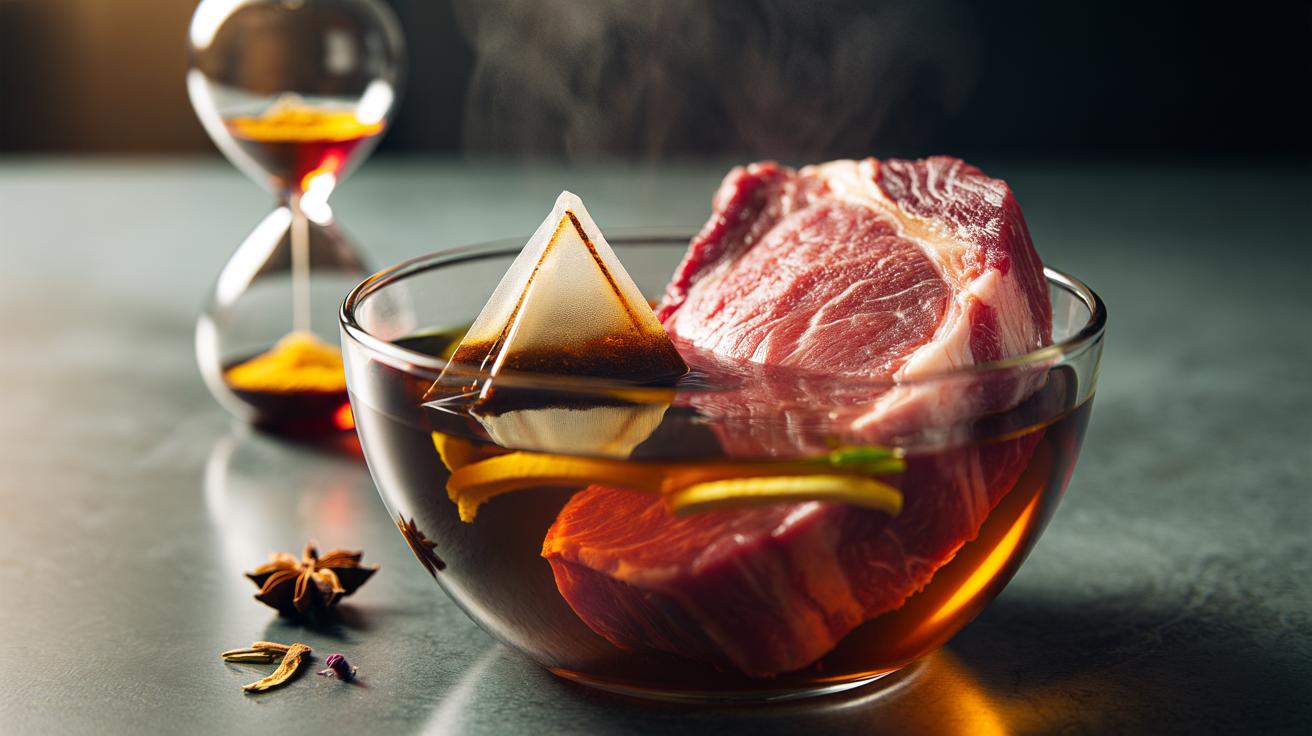
Start with black or oolong tea for dependable tannin levels. Boil the kettle, then steep two tea bags in 250–300 ml hot water for 3–5 minutes. Remove the bags and cool to room temperature. Submerge 300–500 g of meat—steaks, pork chops, or chicken thighs—in a shallow dish with the brew. Refrigerate for 20–30 minutes. Do not exceed 45 minutes or the surface may turn bitter. Pat the meat dry, season as usual, and cook hot to build a crust that locks in juices. The quick sear offsets any residual astringency and amplifies savoury depth.
Seasoning strategy matters. Add 1–1.5% salt by weight to the tea (10–15 g per litre) to encourage protein solubility and water retention; a pinch of sugar (0.5%) tempers bitterness. Aromatics—ginger slices, crushed garlic, a strip of orange peel—can infuse the bath without masking the meat. For smoky dishes, a touch of dark soy complements tea’s malt-like notes. Always chill the tea before marinating and keep meat below 5°C. Discard the used liquid. Then cook confidently: pan-sear for steaks, grill for chops, or roast chicken thighs to render the skin. The payoff arrives fast—clean slices, yielding fibres, and an elegant, tea-laced finish.
Choosing the Right Tea and Cut for Best Results
Different teas deliver different tannin profiles and flavours. Black teas such as Assam or Ceylon produce assertive tenderising and a toasty edge. Oolong strikes a balance—rounded fruit and floral hints—while green tea is lighter, brisker, and less forgiving if steeped too long. White tea is subtle; it conditions more than it softens. Rooibos, caffeine-free and naturally sweet, offers polyphenols with low bitterness, ideal for delicate proteins like chicken. Match the cup to the cut. Robust beef appreciates black tea; lean pork responds well to oolong; poultry benefits from green or rooibos.
Cut selection is just as important. Choose fibre-forward pieces that need a nudge: flank, skirt, chuck steaks cut thin, pork shoulder steaks, and bone-in chops. Dry-aged or very tender prime steaks seldom need help and may lose nuance. For lamb, a brief oolong bath mellows chew without muting character. Fish is not a great candidate—the texture is too delicate. Below is a quick guide to shape your choice.
| Tea Type | Tannin Intensity | Steep Time | Ideal Cuts | Flavour Notes |
|---|---|---|---|---|
| Black (Assam, Ceylon) | High | 3–5 min | Flank, skirt, pork chops | Malty, brisk, toasty |
| Oolong | Medium | 3–4 min | Chuck steak, lamb leg | Floral, fruity, rounded |
| Green (Sencha) | Medium–Low | 2–3 min | Chicken thighs | Grassy, fresh, bright |
| Rooibos | Low | 5–6 min | Chicken breast | Honeyed, gentle, nutty |
| White | Very Low | 4–5 min | Delicate poultry | Soft, sweet, subtle |
Troubleshooting, Safety, and Flavour Pairings
If the surface tastes bitter, shorten the steep or the soak. A stronger brew for a shorter time typically beats a weak, prolonged bath—it targets the exterior where chew begins without saturating the cut. When in doubt, stop at 20 minutes, cook, and assess. For dryness, increase salt in the tea to 1.5% and rest the meat after cooking. If flavour feels flat, introduce supporting notes that echo tea’s profile: soy and brown sugar for black tea; mirin and spring onion for green; star anise and orange zest for oolong. Avoid dairy-based marinades here; proteins can curdle with tannins.
Food safety is non-negotiable. Keep marinating meat refrigerated below 5°C. Use a clean dish, wash hands, and discard the marinade after use—tea’s antioxidants are not a steriliser. Caffeine levels are low in a rinse-off marinade, but caffeine-free rooibos is an easy alternative if you’re sensitive. For grilling, pat dry thoroughly to prevent steaming; for pan-searing, choose a high-smoke-point oil and let the crust develop undisturbed. Finish with a glaze that loves tea: honey–soy, black pepper and molasses, miso–ginger, or pomegranate molasses. The result is balanced: a softened bite, brighter juiciness, and layered aroma without heavy-handed acidity.
There’s quiet pleasure in turning a cupboard staple into a culinary tool. With tannins doing the heavy lifting, a brisk 30-minute soak trims chew, protects juiciness, and sets up flavours that sing under heat. It’s frugal, fast, and repeatable. The key is control—strong tea, short time, cold conditions. The technique won’t replace long braises or premium ageing, but it gives weekday cuts an elegant lift, no fuss required. Ready to brew, chill, and transform your next chop or steak—then experiment with teas and pairings until you find your signature finish?
Did you like it?4.7/5 (24)