In a nutshell
- 🥔 The science: potato starch (amylopectin/amylose) gelatinises at a gentle simmer, swelling to create gloss and body; avoid aggressive blending after thickening to prevent thinning.
- ⏱️ The 10-minute method: finely grate 120–150 g potato per litre, stir into a simmering soup for 5–7 minutes, then rest; stop when it coats the back of a spoon.
- 🧪 Methods at a glance: grated raw potato for clean flavour, instant flakes for speed, leftover mash for creaminess, and a potato starch slurry for precise control.
- 🥄 Choosing spuds and prep: use floury UK varieties like Maris Piper or King Edward, grate finely, don’t rinse (keep surface starch), and season late for accuracy.
- ✅ Troubleshooting and nutrition: thin with hot stock or thicken in small increments; acidity may slow thickening; reheats loosen with a splash of stock; naturally gluten-free and vegan-friendly.
There’s a quick, thrifty way to rescue a thin soup without opening a bag of flour or waiting out a slow reduction. Reach for a potato. In ten minutes, the vegetable’s natural starch transforms broths from watery to lush, delivering body, sheen, and satisfying spoon-coating consistency. It’s dependable. It’s gluten-free. And it tastes like your soup, not a roux. In British kitchens where Maris Piper and King Edward reign, this technique feels almost inevitable: peel, grate, stir, simmer, done. Use potato when you want fast, forgiving thickness and a clean flavour that doesn’t steal the spotlight.
The Science of Potato Starch
What makes potato so effective is the architecture of its starch granules. Rich in amylopectin with a supportive dose of amylose, those granules swell as they heat in liquid, a process called gelatinisation. Around gentle simmer temperatures, they absorb water, burst, and release a web of molecules that tie up free liquid, giving your soup that coveted silk. Bring the soup to a steady, not violent, simmer to let starch set properly without breaking down. Salt and acidity won’t stop thickening, but high acid can delay it slightly; give the pot another minute or two if using tomatoes or wine.
Timing matters. The thickening power climbs rapidly in the first 5–8 minutes, then plateaus. Too much shearing after gelatinisation—think furious blending—can rupture that new network and thin your soup again. Blend earlier if you’re pureeing veg, then add potato to finish. As the soup cools, the starch matrix firms subtly, which helps with body and cling, though refrigeration can intensify firmness. A splash of stock on reheating loosens it elegantly. Respect the starch, and it will repay you with gloss, body, and stability.
The 10-Minute Method for Silky Soup
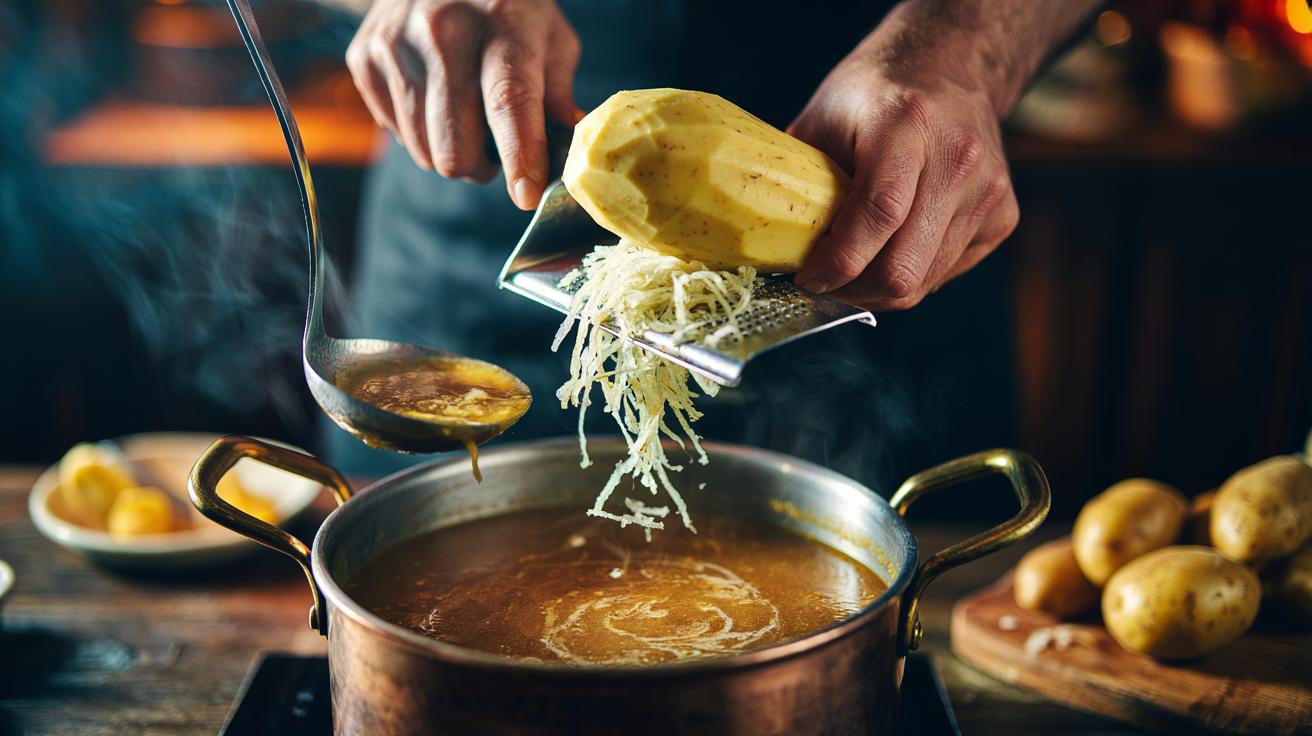
Warm your soup to a lively simmer. Finely grate a peeled, high-starch potato—about 120–150 g per litre of soup—and stir the fluffy shreds straight in. No rinsing; you want that surface starch. Whisk to disperse, then simmer 5–7 minutes, stirring now and then to prevent sticking. Taste. Adjust salt. Rest 2 minutes. That’s it. The liquid tightens, vegetables look lacquered, and the spoon trails a clean line. Don’t boil hard; a gentle simmer preserves thickness and prevents granules from shredding. If you need ultra-smooth texture, hit it briefly with a stick blender before adding the potato, not after.
| Method | How to Add | Ratio (per 1 L soup) | Time | Texture |
|---|---|---|---|---|
| Grated raw potato | Stir in fine shreds | 120–150 g | 5–7 min | Silky, light, neutral |
| Instant potato flakes | Whisk in gradually | 2–3 tbsp | 2–3 min | Very smooth, quick fix |
| Leftover mash (unsalted) | Beat in small spoonfuls | 3–4 tbsp | 3–5 min | Creamy, slightly richer |
| Potato starch slurry | 1 tsp starch + cold water | 1–2 tsp starch | 1–2 min | Glossy, precise control |
If you’re cooking for kids or a late shift and speed is paramount, potato flakes win on convenience. For purists, grated potato gives the cleanest flavour. Either way, work in stages. Add half, simmer, check body, then add a little more. Stop as soon as the soup coats the back of a spoon and leaves a clear trail when you swipe it with a finger. That’s your signal for perfect consistency without heaviness.
Choosing and Prepping the Right Potatoes
Not all spuds behave equally. In the UK, floury varieties—Maris Piper, King Edward, Rooster—deliver the most starch and the fastest thickening. Waxy types like Charlotte or Jersey Royals can still help but offer subtler body and a faintly silky, less plush finish. Peel for a seamless mouthfeel; the skins’ fibre adds rustic character but can interrupt the gloss. Grate on the fine holes for rapid release. Dice works, too, yet needs longer to soften and disperse. Do not rinse grated potato; you’ll wash away the surface starch you need.
Consider the soup’s personality. Earthy mushroom? Grated potato keeps the forest notes intact. Delicate chicken broth? A small slurry of potato starch offers control by the teaspoon. Dairy-based soups welcome leftover mash for gentle richness without extra cream. Additions like leeks, thyme, or bay tolerate the method well. If you’re aiming for crystal clarity, use a minimal dose and avoid over-agitating; starch can slightly cloud a consommé. Season late. Potatoes absorb salt, and seasoning once thickness is set prevents overshooting. Right potato, right cut, right moment—then let heat finish the job.
Troubleshooting, Nutrition, and Smart Variations
Too thick? Whisk in hot stock in small splashes until flow returns. Too thin after 7 minutes? Add another tablespoon of flakes or a fresh pinch of grated potato and simmer briefly. Avoid gluey textures by keeping to a gentle simmer and limiting aggressive blending once the soup thickens. If acidity dulled thickening, give it another minute, then correct brightness with a squeeze of lemon at the end. For make-ahead batches, expect slight firming in the fridge; loosen on reheat. Simmer softly, stir calmly, and build thickness gradually.
Health-wise, potato adds body without butter or flour, bringing modest potassium and vitamin C, and it keeps soups gluten-free. For vegans, it’s a gift: finish with olive oil and herbs for polish. Try smoked paprika in tomato soup, dill in leek-and-potato, or miso in mushroom for umami depth. Spice lovers can bloom curry paste first, then thicken to cushion the heat. The core idea stays the same: use starch to trap water and suspend flavour evenly. A small potato can turn a thin broth into a satisfying meal in minutes.
When a soup needs saving—or simply elevating—potato is the swift, subtle fix hiding in plain sight. It thickens cleanly, tastes honest, and works across cuisines, from leek and chicken to tomato and bean. You’ll spend pennies, not pounds, and gain a restaurant-level sheen without the faff of a roux. Keep flakes for emergencies, reach for a Maris Piper when you’ve got time, and simmer to the sweet spot. One ingredient, ten minutes, perfect consistency. Which soup in your repertoire will you rescue with potato starch next, and how will you put your own spin on it?
Did you like it?4.4/5 (23)