In a nutshell
- 🍌 Banana peel acts as a natural activator, its sugars and potassium fuel microbes to raise heat overnight, while full maturity still takes weeks.
- ⚡ Overnight method: build volume (~1 m³), layer browns:greens ≈ 2:1, add a banana slurry, keep moisture like a wrung sponge, aerate to hit 55–65°C.
- 🧪 Balance matters: target a C:N ratio 25–30:1; banana peel (~25–35:1) pairs with coffee grounds and grass, buffered by fluffy browns to maintain airflow and structure.
- 🛠️ Troubleshoot fast: ammonia smells → add browns and air; sour notes → fix drainage; deter pests by burying scraps, using rodent-proof bins, and capping feeds.
- 🌱 Practical wins: chop peels or blend, turn every 2–3 days, let finished compost cure 2–4 weeks; worms relish softened peel, boosting nutrient-rich castings.
Banana skins. The throwaway from breakfast that could be the secret to a faster, hotter, more generous compost. In British gardens where the weather flips from damp to dry in a day, a reliable accelerator is gold. Chopped banana peel, rich in readily digestible sugars and potassium, can jump‑start the microbes that turn your clippings and kitchen scraps into soil food. Think of it as a natural booster rather than a miracle cure. You’ll see heat and texture shift overnight, while full maturity still takes weeks. Used smartly, this free resource trims time, smooths odours, and gives your heap the fierce energy it needs.
Why Banana Peel Supercharges Compost
Banana peel is a microbial feast. Its soft tissues brim with simple carbohydrates, soluble minerals (notably potassium and a touch of phosphorus and magnesium), and enough nitrogen to qualify as a “green” in composting terms. Microbes attack these sugars first, multiplying rapidly and raising core temperatures. That surge of life makes the pile steam, and the heat unlocks tougher materials nearby. Chopped peel acts like a starter, not unlike adding yeast to warm dough. The result? Faster decomposition, superior texture, and a head start on that earthy aroma every composter loves.
Surface area is the quiet hero here. Whole peels clump and rot slowly; sliced strips work better; a quick blitz in water creates a banana slurry that coats fibres and contact-points. This reduces lag time. Worms, if you’re running a vermicomposter, are equally appreciative: they swarm the softened peel and deposit castings that turbocharge nutrient availability. There is a caveat. Banana peel is low in calcium carbonate and relatively modest in nitrogen compared with manures, so it shines best as an activator alongside a balanced mix rather than as the main feedstock.
Overnight Method: From Scraps to Steaming Heap
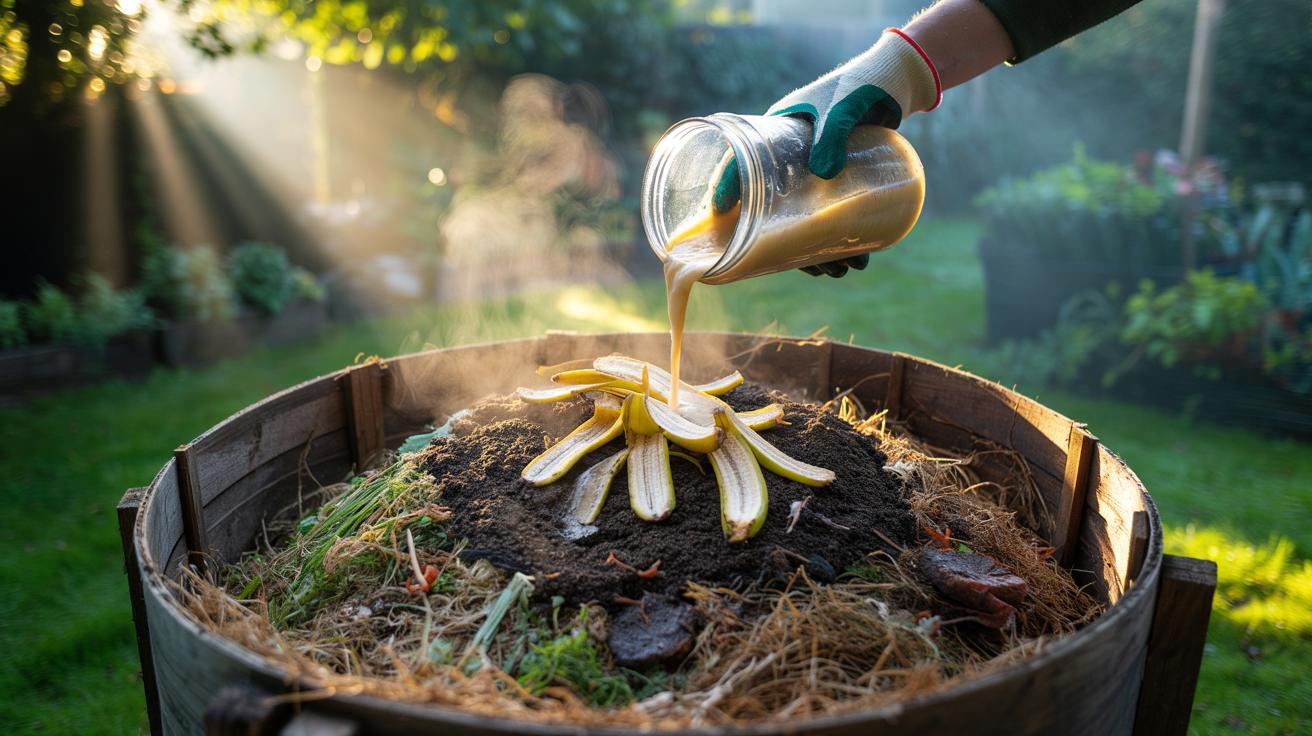
Start with mass. Hot composting needs volume, roughly a one‑metre cube, or at least a well‑insulated bin. Layer browns (dry leaves, shredded cardboard, straw) and greens (fresh clippings, veg scraps) at about 2:1 by volume. Now the accelerator: chop two to four banana peels or blitz them with a litre of warm water to make a thin slurry. Drizzle the slurry across a green layer and cap with browns. This simple tweak can lift a sleepy pile into the 55–65°C zone overnight, a safe, efficient range that speeds breakdown and knocks back pathogens and weed seeds.
Moisture is crucial. Aim for the “wrung sponge” feel; if a handful drips, it’s too wet, if it crumbles, too dry. Add more browns or a little water accordingly. Aeration follows. Turn the heap lightly or drive a compost aerator or fork down several times to open channels. In tumblers, rotate five or six full turns. Insulate the top with a mat of cardboard or straw to hold the heat. By morning you should notice steam, a warmer core, and a sweet, forest‑floor smell rather than ammonia. If it smells sharp, add browns and air.
What’s ready by morning? Not finished compost. But you can harvest a small amount of mature-like crumble from edges for mulch, or steep a cup of hot material in a bucket of water to brew a quick, non-aerated “compost soak” for the day’s watering. The bulk will continue cooking. Turn every two to three days during the first week to maintain that momentum, re‑adding banana slurry in modest doses if heat drops prematurely.
Science, Ratios, and a Quick Reference Table
Compost thrives near a C:N ratio of around 25–30:1. Too much nitrogen triggers ammonia smells and clumping; too much carbon slows everything to a crawl. Banana peel, roughly in the mid‑20s to mid‑30s by C:N, nudges a cool, carbon‑heavy pile towards balance while fuelling microbes with accessible energy. That’s why a little goes a long way. Blend peels with other greens like coffee grounds and grass, then buffer them with fluffy browns. Structure is as important as chemistry: keep particles small but not suffocating, and always preserve air pockets.
| Material | Role | Approx. C:N | Prep Tip |
|---|---|---|---|
| Banana peel | Green booster | ~25–35:1 | Chop or blend into slurry |
| Coffee grounds | Green | ~20:1 | Mix thinly to avoid mats |
| Shredded leaves | Brown | ~50–80:1 | Shred dry for airflow |
| Straw/cardboard | Brown | ~80–150:1 | Moisten first for uptake |
A simple recipe: two buckets of browns, one bucket of greens, a jug of banana slurry, and a quick fork‑through for air. If the pile still lags, add a sprinkle of mineral grit or crushed eggshell to counter acidity, and keep moisture steady. Even fast piles need a curing phase before soil use; let the finished compost rest for two to four weeks until it smells sweet and is cool to the touch.
Troubleshooting Smells, Pests, and Slow Piles
Bad odours signal imbalance. Ammonia means too much nitrogen; add shredded cardboard and turn. Sour, vinegary notes point to waterlogging; fluff the heap, poke air shafts, and mix in dry browns. Fruit flies? Bury all food scraps at least 15 cm deep and cap every feeding with a carbon “blanket.” In urban gardens, rodent‑proof bins and tidy edges are non‑negotiable; avoid meat, oils, and cooked foods. You can freeze peels overnight to disrupt eggs and soften tissues, then thaw and chop for quicker breakdown.
Cold pile? Check three culprits: size, moisture, and oxygen. Add volume to hit that one‑metre bulk; squeeze to “wrung sponge”; punch in air or turn more aggressively. If your greens are scarce, banana peel can bridge the gap, but don’t overdo it—slimy layers stall airflow. Sprinkle in structural browns like straw to keep pores open. For balcony or small‑scale setups, try a lidded caddy: blend peels into a thin slurry and fold it through coir and dry leaves for a mini hot batch. If it stinks, add browns and air; if it’s dry and cold, add water and a little peel.
Banana peel isn’t magic, but it is smart, circular, and free. Used as a natural activator, it injects energy into a lagging heap, lifts temperatures quickly, and helps ordinary garden waste transition into a dark, friable conditioner with far less waiting. Keep your ratios honest, your moisture steady, and your airflow generous, and the rest follows. By morning you’ll feel the warmth, and within days you’ll see a visible shift in texture and smell. Ready to give your compost an overnight nudge—and what will you try first: chopped peel, slurry, or a stealth layer under fresh browns?
Did you like it?4.3/5 (20)