In a nutshell
- 🌱 Banana peel is a potassium-rich booster that supports blooms, sturdy stems, and resilience, while added phosphorus, calcium, and magnesium plus carbohydrates feed the soil microbiome.
- 🍌 Use it via chop-and-bury (bury 5–10 cm), brew banana peel tea (24–48 hours, dilute 1:2), make dried peel powder, or add to the compost heap for steady release.
- ⚡ Expect a quick lift from tea within a day and visible gains in 7–14 days; long term, peels improve soil structure and stabilise nutrient release.
- 🚫 It’s not a complete fertiliser: avoid leaving peels on the surface, watch for pests and sour brews, and stick to small, regular doses to prevent soggy, anaerobic soil.
- 📝 Pair with nitrogen sources (compost, seaweed, manure), target roses, tomatoes, and containers, and bury 5–10 cm deep to deter pests and speed decomposition.
Before you reach for a pricey fertiliser, glance at the fruit bowl. The humble banana peel, often binned without a thought, is a potent, low-cost feed that gardeners across the UK quietly rely on. Rich in plant-friendly minerals, it can kick-start growth, lift flagging blooms, and coax stronger roots with little fuss. Potassium is the headline act, but there’s more: phosphorus, calcium, and magnesium arrive in a gentle, soil-building package. Used correctly, banana peel can spark visible improvements surprisingly quickly, then keep delivering as it breaks down. Here’s how the science stacks up, the best ways to use it, and the common pitfalls to dodge for instant, sustainable results.
Why Banana Peel Works for Plants
Banana peel earns its reputation because it’s naturally high in potassium (K), the mineral that supports water regulation, sturdy stems, and abundant flowering. While nitrogen fuels leafy growth, potassium is the steady hand behind colour, resilience, and bloom quality. You also get phosphorus for root development, calcium for cell strength, and magnesium for chlorophyll production. The peel’s carbohydrates feed the soil microbiome, which in turn releases these nutrients in plant-available forms. That symbiosis matters: healthier microbes, healthier plants.
There’s a speed element too. When peels are steeped in water or finely ground, a fraction of the soluble potassium can become available quickly, giving stressed ornamentals or hungry veg a gentle nudge. Then the remainder breaks down over weeks, acting like a slow-release tonic. Crucially, banana peel is typically low in sodium and relatively balanced, so it won’t harshly alter soil pH. Think of it as a soft boost and a quiet builder—ideal for containers, borders, and allotments where consistent, light feeding pays dividends.
Simple Methods to Use Banana Peel in the Garden
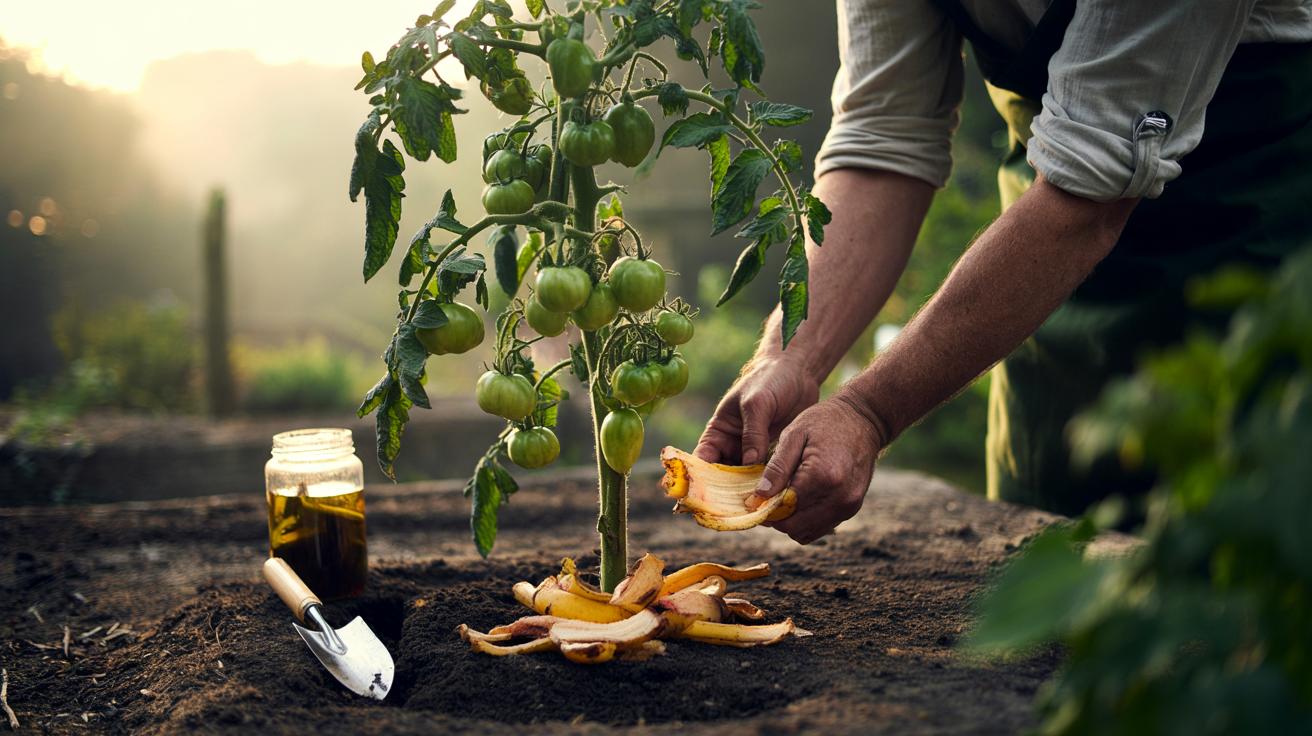
The cleanest approach is the chop-and-bury method. Snip fresh peel into postage-stamp pieces and bury them 5–10 cm deep around ornamentals, roses, tomatoes, and peppers, staying a few centimetres from stems. Do not leave peels on the surface: that invites foxes, rodents, and fruit flies. For containers, use thinner slices and smaller amounts, then water in. Another fast favourite is banana peel tea: soak chopped peels in a lidded jar of rainwater for 24–48 hours, strain, dilute 1:2 with water, and drench the root zone. Use immediately; if it smells sour, discard it in the compost, not on plants.
For less mess, dry peels on a sunny windowsill or a low oven, then blitz into a powder. Sprinkle a teaspoon per litre of compost for houseplants or a tablespoon per medium outdoor pot, then scratch in. You can also add peels to the compost heap as a green input, balancing with shredded cardboard or straw to keep the heap sweet and airy. Light, regular feeds beat occasional glugs—repeat small applications every two to three weeks during active growth.
| Method | How Much | How Often | Notes |
|---|---|---|---|
| Chop-and-bury | 1 peel per medium plant | Every 3–4 weeks | Bury 5–10 cm deep to avoid pests |
| Peel tea | 1 peel per 500 ml water, dilute 1:2 | Every 2 weeks | Steep 24–48 hours; use fresh only |
| Dried peel powder | 1 tsp per litre of compost | Monthly | Scratch in lightly and water |
| Compost heap | As part of kitchen scraps | As available | Balance with browns (cardboard, straw) |
What to Expect: Faster Growth and Healthier Soil
Results can be swift, especially with liquid applications. After a peel tea drench, thirsty plants often perk up within a day as potassium supports better water movement. Visible gains—firmer stems, richer leaf tone, new buds—tend to appear over 7–14 days, accelerating as soil microbes get to work on buried or powdered peel. Roses push more confident buds, tomatoes hold their trusses better, and container annuals keep colour longer between main feeds. That’s the short-term story. The longer arc is quieter yet profound: improved soil structure, livelier microbial life, and more stable nutrient release.
Watch for tell-tale signs of potassium deficiency—marginal leaf scorch, weak stems, small or dull blooms. Banana peel won’t cure every problem, but it helps nudge plants back into balance without a chemical sledgehammer. Pair it with a balanced feed or nitrogen source—compost, well-rotted manure, seaweed extract—because peel is not a complete fertiliser. The best outcomes come from layering: modest peel inputs, mulching to hold moisture, and regular deadheading or pruning. In short, a tidy, repeatable routine that turns kitchen waste into garden momentum.
Common Myths, Risks, and How to Avoid Them
Myth one: “Banana peel is a miracle fertiliser.” It’s a mighty potassium top-up and soil booster, not a full feed. Add nitrogen elsewhere. Myth two: “Just throw it on the soil.” Leaving peel on the surface is an open invitation to pests, plus it decomposes slower and can look unsightly. Chop and bury or brew and use. Some worry about pesticide residues on peels; a quick rinse is prudent, and composting helps microbes break down traces. For houseplants, avoid tucking fresh peel into pots—fungus gnats will throw a party.
Overuse can backfire. Too many peels in a small pot can turn soggy, sour, and oxygen-starved. Keep quantities modest and aeration high. If a jar brew smells vinegary or rotten, don’t rescue it; compost and start again. Small, regular doses are safer and more effective than one enthusiastic dump. Finally, banana peel won’t shift soil pH meaningfully, nor will it fix deep nutrient imbalances alone. Consider an occasional soil test for vegetable beds and high-value borders, then use peel as part of a thoughtful, low-waste feeding plan that respects the ecosystem under your feet.
In the end, banana peel is smart, sustainable gardening: a gentle potassium-rich lift now, plus microbial nourishment that keeps paying out. It’s cheap, local to your kitchen, and easy to fold into weekly routines without fuss. Start with one method, observe, adjust. Your plants will tell you what works. Roses, tomatoes, and patio tubs often respond first; shrubs and perennials follow as the soil improves. Ready to turn today’s snack into tomorrow’s bloom? Which method will you try first, and what plant will be your test case for this simple, thrifty trick?
Did you like it?4.5/5 (25)