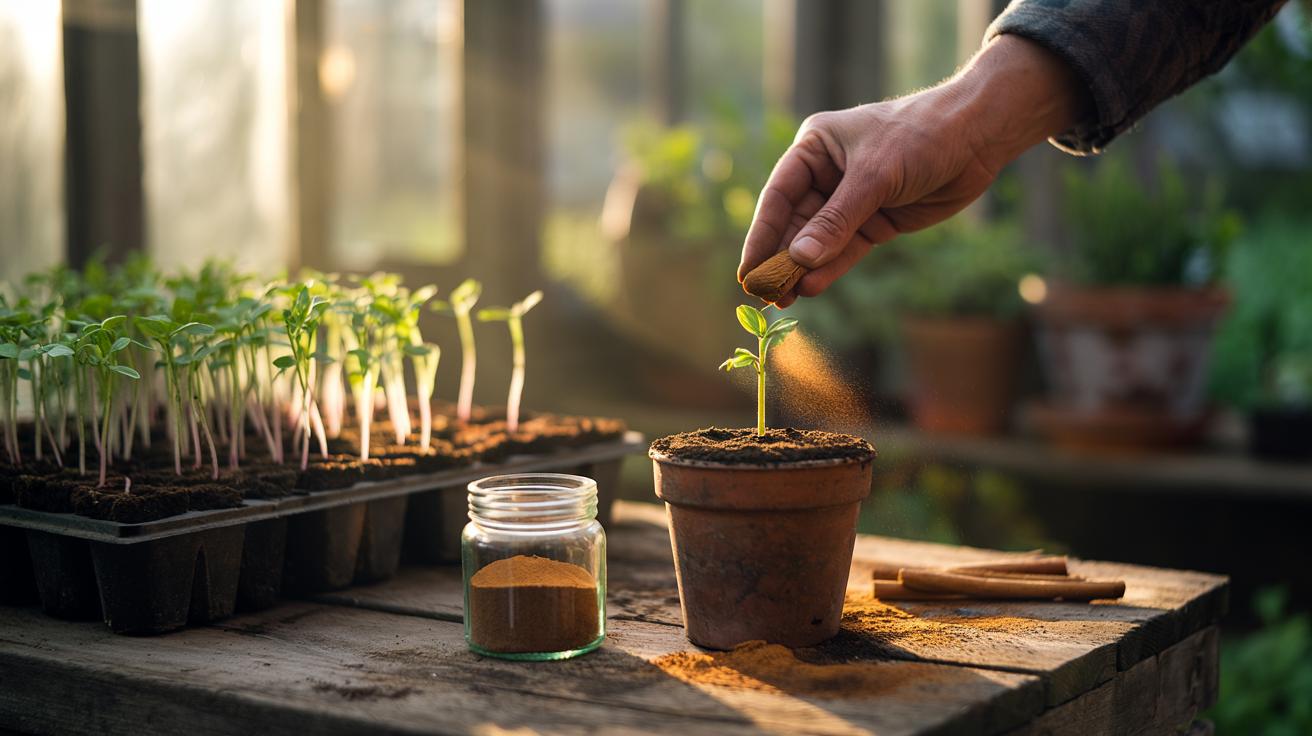
In a nutshell
- 🌿 Cinnamon as a natural fungicide: cinnamaldehyde disrupts fungi (e.g., Pythium, Fusarium, Rhizoctonia), lowering damping-off and promoting healthy roots.
- 🧪 How to use: dry dusting on cuttings, a “cinnamon tea” drench (1 tsp per 250 ml water), or a thin paste for bulbs/tubers; apply lightly to protect wounds and aid callus.
- ⚠️ Limits & safety: it’s supportive, not curative; avoid strong essential oils (phytotoxic), keep powders from pets/children, and always spot-test sensitive plants.
- ⚙️ Fast rooting tactics: pair cinnamon with clean tools, free-draining media, high airflow, staged watering, and bottom heat 18–22°C to speed establishment.
- 🌍 Sustainable edge: low-cost, accessible, and reduces reliance on synthetic fungicides; deploy during risk windows (cool springs, humid propagators) for maximum effect.
There’s a quiet staple in the spice rack that doubles as a gardener’s ally. Cinnamon, celebrated in puddings and mulled wine, also works as a natural fungicide that can steady seedlings, protect cuttings, and keep the soil’s microbial balance in check. Used wisely, it helps plants shift energy from fending off disease to building vigorous roots. Results aren’t magic, yet they appear quickly when conditions are right: fewer losses to damping-off, faster callusing, cleaner wounds. Think of cinnamon not as a fertiliser, but as a gentle shield that gives roots the breathing space to grow. Here’s how and why it earns a place on your potting bench.
How Cinnamon Acts as a Natural Fungicide
Cinnamon’s edge lies in its aromatic chemistry. The key compound, cinnamaldehyde, disrupts fungal cell membranes and interferes with spore germination, undermining common culprits such as Pythium, Fusarium, and Rhizoctonia that trigger seedling collapse and root rot. In plain terms, fewer pathogens gain a foothold in the rhizosphere. That matters because young roots are tender, richly sugared, and irresistibly attractive to microbes. By trimming pathogen pressure, cinnamon shifts the balance towards the plant’s own recovery and extension, especially in early propagation.
It also helps dry and sanitise small wounds. Powder dusted onto cut stems forms a fine barrier, encouraging callus formation while reducing the microbe load on fresh tissue. Combine that with careful watering and good airflow, and the effect compounds: fewer setbacks, quicker rooting, stronger starts. Used at modest rates, cinnamon provides meaningful protection without the heavy ecological footprint of broad-spectrum synthetics. It won’t fix poor hygiene or soggy compost, yet it complements both sterile technique and commonsense care to keep new growth on track.
Using Cinnamon to Encourage Rapid Rooting
Propagation thrives on clean cuts, steady moisture, and minimal disease. Cinnamon fits neatly into that triad. For softwood or semi-ripe cuttings, tap the cut end into dry ground cinnamon and shake off the excess; a whisper-thin coat is enough. The powder discourages fungi at the wound surface, buying time for callus to form. For seedlings plagued by damping-off, brew a light “cinnamon tea”: one teaspoon ground cinnamon in 250 ml hot (not boiling) water, steeped until cool, then strained. Use as a soil drench for trays that stay too damp. Go light: more is not better, and concentrated mixes can scorch tender tissue.
Some growers blend a smearable paste for larger wounds on bulbs or tubers. Others mist benches with a highly diluted solution to temper disease hotspots in humid propagators. The rule is consistent—target the risk zone, keep airflow high, and avoid caking the medium. Below is a quick guide you can pin near the potting bench.
| Method | Ratio/Rate | When to Use | Notes |
|---|---|---|---|
| Dry dusting | Light tap of powder | Cuttings, pruned wounds | Shake off excess; aids callus |
| Cinnamon tea drench | 1 tsp per 250 ml water | Seedling trays, wet compost | Steep, strain, apply sparingly |
| Paste for lesions | Powder + a few drops water | Bulbs, corms, tubers | Thin film; let dry before planting |
Evidence, Limits, and Safety for Soil and Houseplants
Laboratory and horticultural trials repeatedly show that cinnamaldehyde-rich extracts suppress several plant-pathogenic fungi and some bacteria, especially in moist, warm conditions where disease races ahead. That aligns with real-world reports from allotments and glasshouses: fewer losses to damping-off, tidier cut surfaces, healthier root tips. Yet expectations should be realistic. Cinnamon is supportive, not curative. It reduces pressure; it does not sterilise compost or rescue plants in advanced decline. If drainage is poor or humidity is excessive, no spice will compensate for flawed conditions.
Mind the formulation. Ground kitchen cinnamon (often cassia) works for light use, but essential oils are potent and can be phytotoxic when misapplied. Avoid direct contact between strong oil solutions and delicate foliage. Keep powders away from pets’ noses and children’s hands; it’s an irritant in high doses. For orchids, ferns, and very fine seedlings, start with a tiny trial. Wash hands after application and store the jar sealed, dry, and labelled. Respect these limits and cinnamon becomes a low-cost, low-impact tool that suits both windowsills and polytunnels.
Practical Tips to Maximise Root Health Fast
Speed comes from synergy. Pair cinnamon with bright, indirect light, a free-draining medium, and scrupulously clean tools. Water to settle, then let oxygen back into the compost before the next drink; roots need air as much as moisture. Bottom heat at 18–22°C hastens cell division, while a light feed after rooting—seaweed or a gentle, balanced fertiliser—nudges growth along. Sterilise trays, space cuttings to improve airflow, and label dates to track progress. Cinnamon works best when it is the final 10% that protects the other 90% of good practice.
For sustainability-minded gardeners, the appeal is clear. A pinch of a household spice reduces reliance on harsh synthetics and cuts waste. It’s frugal, accessible, and simple enough for beginners. Use it during peak disease windows—cool springs, steamy propagators, crowded seed trays—then taper off as roots explore and toughen. Think prevention, not firefighting. Do that, and you’ll see callus form sooner, losses drop, and transplants settle quickly without drama.
Cinnamon won’t rewrite botany, but it can tilt the odds. Keep it light, keep it clean, and let the roots do the rest. By putting disease on the back foot, plants divert energy to building strong, white root systems that anchor growth for the season ahead. The result is visible: sturdier stems, faster establishment, fewer disappointments. A small habit change—one dusting, one drench—can change an entire tray’s fate. How might you integrate this simple spice into your propagation routine, and which plant on your bench will be the first to benefit?
Did you like it?4.6/5 (20)