In a nutshell
- 🌿 Newspaper mulch creates a light-blocking, permeable barrier that halts weed germination, smothers seedlings, and gradually enriches soil as fibres decompose.
- 🛠️ For season-long results, prep and layer correctly: water soil, lay 6–10 sheets with 10 cm overlaps, wet as you go, top with 5–7 cm mulch, and cut tight X-shaped planting holes.
- 📏 Match thickness to pressure: 4–6 sheets (8–12 weeks), 6–10 (3–6 months), and 10–12+ (6–12 months), with coarse mulch on top for durability.
- 🧻 Choose safe materials: plain black-and-white newsprint with veg-based inks; avoid glossy pages; use cardboard (tape removed) for thuggish weeds; pair with compost, leaf mould, or wood chips.
- ♻️ Low-cost and sustainable: reduces plastic membranes, stabilises moisture and temperature, minimises nitrogen drawdown at the surface, and boosts soil structure via worm activity.
In a year of squeezed budgets and wild weather, gardeners across the UK are rediscovering a humble, ingenious ally: newspaper mulch. Layered sheets act as a physical barrier that blocks light, suppresses weed germination, and quietly improves soil structure as they break down. It’s cheap, accessible, and forgiving. Lay it once, and it works while you sleep. This low-tech trick can keep beds clear for months without a drop of herbicide. Done well, it also stabilises moisture during dry spells and protects the soil surface during downpours. Here’s how to make those layers last the whole season, and why the simple science of paper beats weeds at their own game.
How Newspaper Layers Block Light and Weeds
Weeds need light to thrive. Deprive emerging seedlings of sunlight and you halt photosynthesis at the starting line. Stacked sheets of newsprint create an opaque, breathable blanket that stops light from reaching the soil surface. Without that stimulus, buried seeds don’t germinate; existing seedlings, forced to grow through multiple fibre layers, exhaust themselves. This is the essence of weed suppression: physical exclusion rather than chemical warfare.
There’s a second win. Paper fibres slow evaporation yet allow rain to seep through, helping the bed maintain even soil moisture. In practical terms, that means fewer water stress swings, steadier growth, and less cracking during heat. The sheet barrier also blunts temperature extremes, acting like a thin duvet. As newspaper gradually decomposes—often over one growing season—soil life gets a snack. Earthworms drag fragments down, boosting soil structure and creating microchannels for air and water. You’re not just stopping weeds; you’re kick-starting a living mulch cycle.
Critically, newspaper is permeable. It smothers, but it doesn’t seal. Carbon-rich paper doesn’t steal nitrogen from plant roots at the surface because the decomposition is slow and largely confined to the interface below the top mulch. Match the sheet count to your weeds. Thinner layers for light weed pressure, thicker stacks for docks and nettles.
Setting Up Layers That Last All Season
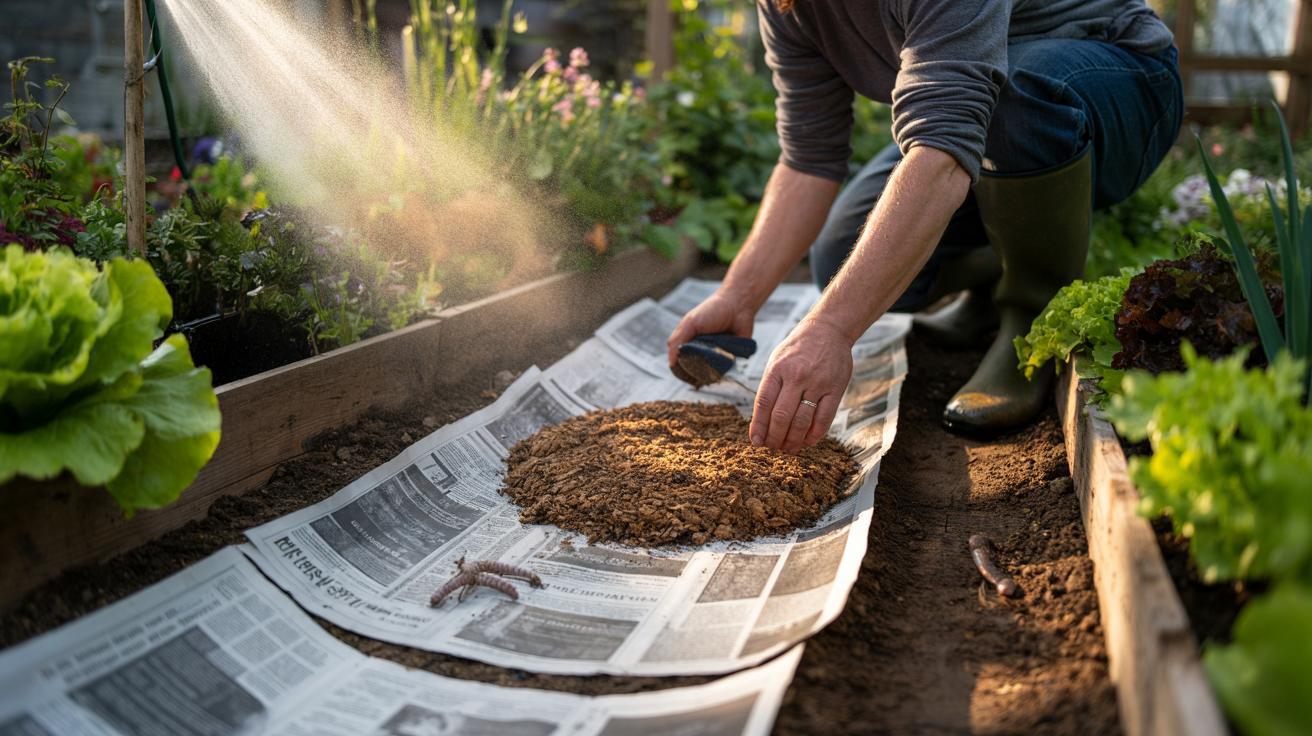
Good prep makes newspaper work harder, longer. First, knock back tall growth with a strimmer, rake off seed heads, and water the soil thoroughly. Damp soil anchors sheets and speeds the bond between paper and ground. Lay down 6–10 sheets of plain black-and-white newsprint (no glossy inserts), overlapping edges generously. Overlap by at least 10 cm to stop sneaky light leaks. Wet each batch as you go; water glues fibres together so wind can’t lift them.
Top with 5–7 cm of mulch. Compost gives nutrients, leaf mould protects structure, wood chips last longest on paths. For planting, cut a neat X through the paper and tuck flaps back, keeping the hole tight around stems. Edges and stems are where weeds break through, so patrol those lines. In windy, coastal gardens, pin with bricks or biodegradable pegs until the top mulch settles. Keep an eye on irrigation; drip lines beneath the paper work brilliantly for thirsty crops.
| Layer (Sheets) | Expected Duration | Best Use | Notes |
|---|---|---|---|
| 4–6 | 8–12 weeks | Vegetable beds | Fast to lay; top up mid-summer |
| 6–10 | 3–6 months | Perennial borders | Balances longevity and breathability |
| 10–12+ | 6–12 months | Paths and tough weeds | Pair with coarse mulch for durability |
Re-wet in dry spells to keep fibres matted and functional. When autumn arrives, most layers have melted into the bed. Simply add fresh sheets and mulch, repeating the cycle without digging—ideal for no-dig allotments and time-poor gardeners who still crave tidy rows.
Paper Choices, Mulch Pairings, and Sustainability
Not all paper is equal. Choose plain, non-glossy newsprint; UK newspapers largely use vegetable or soy-based inks that are considered garden-safe. Avoid glossy supplements, coloured magazine pages, and waxed packaging, which can resist moisture and include undesirable coatings. For heavy thugs like couch grass or bindweed, some gardeners switch to cardboard. It’s tougher, but remove all tape and labels—microplastics have no place in a soil food web. If in doubt, stick to simple black-and-white sheets.
Mulch pairing matters. Compost feeds and integrates quickly, perfect for veg beds. Leaf mould is light, insulating, and weed-free if mature. Wood chips last longest but can encourage slugs in damp corners; keep them off seedling stems and consider a drier buffer of grit around vulnerable plants. The combination of paper below and mulch above delivers resilience: paper blocks light, mulch shields paper from UV and scuffing, and together they regulate moisture in fickle British summers.
Concerns about nitrogen lock-up are often overstated for surface-applied paper. Because the carbon sits above the main rooting zone, any temporary microbial drawdown happens at the interface, not deep in the rhizosphere. Add a thin layer of finished compost under the sheets if you’re nervous. Costs are minimal—most communities have free local papers, and neighbours often welcome a recycling diversion. The method is also climate-conscious: you’re sequestering carbon short-term, cutting plastic weed membranes, and lowering water use. Simple materials, big ecological dividends.
Used wisely, newspaper acts like a quiet gardener: it prunes weed ambition, steadies moisture, and feeds life below your boots. It’s tactile, quick, and reversible. No special kit. No landfill plastic. Just sheets, water, and a top dressing that suits your plot. This season, try a bed or a path and track the difference in time saved and soil feel after rain. Will you test newspaper mulch on one stubborn corner first, or go bold and sheet-mulch an entire border to see just how clean and productive a bed can be?
Did you like it?4.4/5 (20)