In a nutshell
- 🌙 Overnight effect: Onion releases sulphur thiosulfinates that create a repellent odour haze; cool night air and dew slow breakdown, cutting aphids settling and feeding by morning.
- 🧪 Onion spray: Chop 2 onions, steep in hot water 8–12 hours, dilute 1:3, add 1–2 ml mild soap per litre; patch‑test, target leaf undersides, and apply at dusk every 3–4 days; refrigerate up to 72 hours.
- 🌿 Companion planting: Ring roses, brassicas, and tender growth with onions, garlic, or chives; place alliums upwind, attract beneficial insects with flowering herbs, curb excess nitrogen, and disrupt ant farming routes.
- 🧱 Integrated Pest Management (IPM): Pair onion tactics with hand removal, selective traps, and habitat for predators; avoid drenching buds or spraying in heatwaves; give legumes space and rotate alliums annually.
- ✅ Natural defence: A fast, low‑cost, chemical‑free shield that’s gentler on pollinators; evening use prevents scorch, the smell dissipates quickly, and results show as cleaner leaves by sunrise.
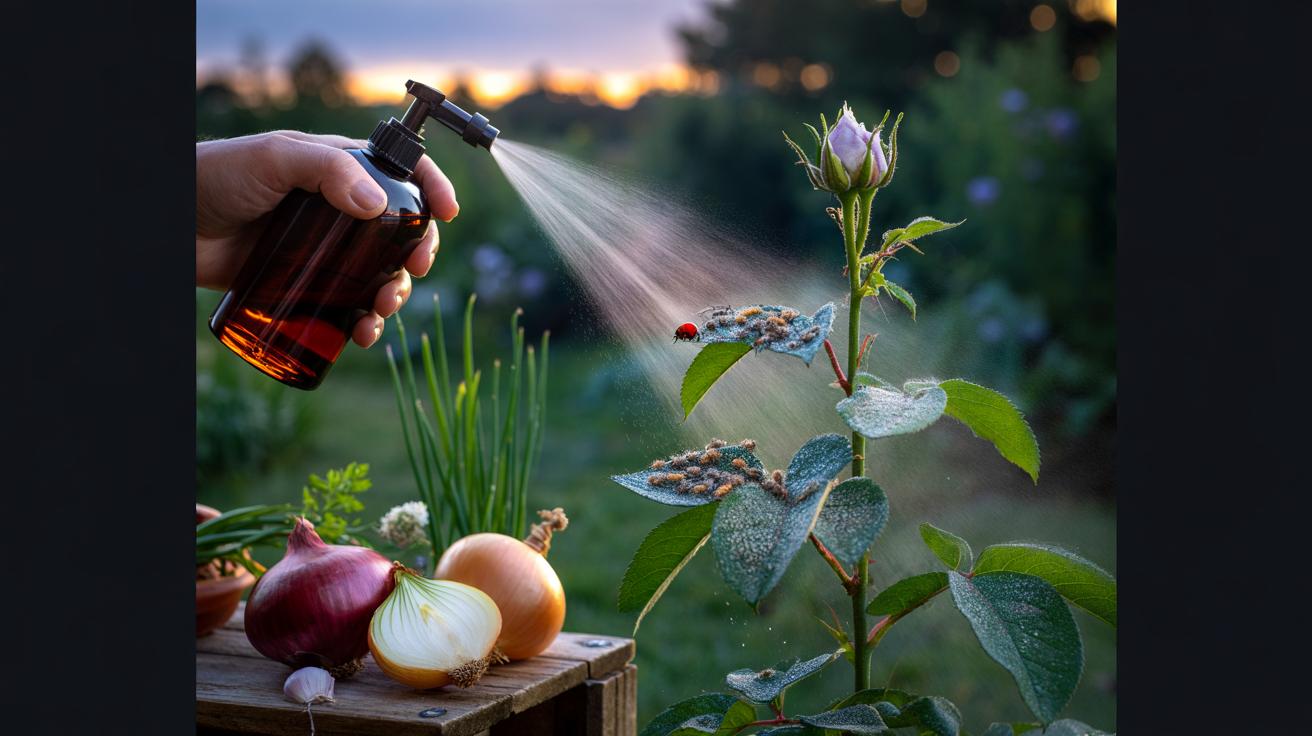
Gardeners dread the first tell‑tale curl of leaves and the sticky film on stems. Aphids have arrived. Yet the solution might already be in your larder. Crushed onion releases a bouquet of sulphur compounds that confuse sap‑suckers, mask plant scents, and interrupt feeding. Applied at dusk, a simple infusion becomes a fast, fragrant shield by morning. It’s low‑cost, chemical‑free, and scaleable from patio pots to allotment beds. Used thoughtfully, onion can turn a vulnerable border into a resilient, living defence overnight. Here’s why it works, how to mix it, and where it fits within a broader, wildlife‑friendly plan to keep aphids off your plants.
Why Onion Works Overnight Against Aphids
When onions are chopped, the enzyme alliinase transforms amino‑acid precursors into volatile thiosulfinates such as allicin. These sulphur‑rich molecules are pungent to us and doubly disruptive to insects. They mask the subtle blend of leaf odours aphids use to locate hosts and can deter feeding once they land. In field trials and garden practice, alliums act like a bio‑fog: a repellent haze that muddles orientation and reduces settling on nearby plants. This is not a nerve poison; it’s a sensory smokescreen that buys your plants time.
So why the overnight magic? Cool, still night air helps odours linger. Dew wets leaf surfaces, forming a thin film that holds onion compounds where aphids probe. With UV light absent, those compounds break down more slowly, staying active until sunrise. That’s when you notice the change: fewer clusters under leaves, less honeydew, less ant activity. Some aphids simply drop. Others disperse to less confusing targets. The effect is strongest on small colonies and early infestations, which makes timing everything.
Spray at dusk to maximise adhesion, persistence, and plant safety. Direct sun can scorch leaves; evening applications avoid that risk and align with aphid behaviour, which includes night feeding pulses. In short, onion offers a natural defence that’s fast, gentle on beneficials when used selectively, and surprisingly potent in cool, humid conditions common in the UK.
How to Make and Use an Overnight Onion Spray
You need only three things: onions, hot water, and a mild, non‑bio washing‑up liquid as a surfactant. Chop two medium onions, skins and all, and cover with 1 litre of hot (not boiling) water. Steep for 8–12 hours, strain, then dilute 1:3 with clean water. Add 1–2 ml of soap per litre of finished spray to help it cling to the waxy cuticle. Test on a single leaf, wait 24 hours, then proceed. Always target the underside of leaves where aphids cluster, and spray at dusk so the infusion can work through the night.
| Step | Quantity/Timing | Notes |
|---|---|---|
| Chop onions | 2 medium bulbs | Include skins for extra thiosulfinates |
| Steep in water | 1 L, 8–12 hrs | Hot, not boiling, to protect volatiles |
| Strain and dilute | 1:3 with water | Strain finely to avoid nozzle clogging |
| Add surfactant | 1–2 ml per L | Mild, non‑bio only; avoid detergents with bleach |
| Application | Dusk, every 3–4 days | Focus on young shoots and leaf undersides |
| Storage | Up to 72 hrs chilled | Discard if sour or cloudy |
Repeat treatments as colonies wane, then reduce to weekly maintenance. On tender ornamentals, halve the onion load and shorten contact time by lightly misting. Never drench buds or flowers, and avoid heatwaves, when any spray can scorch. The smell fades within a day outdoors, but keep pets away while leaves are wet. Pair the spray with hand‑squishing heavy clusters; speed matters, especially on roses and broad beans in peak spring flush.
Companion Planting, Bed Design, and Allium Allies
Beyond a bottle, plant your defence. Intercrop onions, garlic, or chives around vulnerable hosts—roses, brassicas, and soft‑growth annuals. A 30–40 cm ring of chives around roses works neatly and flowers for pollinators. Spring onions make excellent edging in raised beds, creating a low odour curtain. Diversity is your strongest shield: mix flowering herbs like dill and yarrow to attract ladybirds and hoverflies that predate aphids relentlessly.
Design helps the chemistry. Stagger alliums upwind of target beds so their volatile plume drifts across foliage during evening calm. Keep spacing open; dense, sappy growth invites aphids. Avoid over‑fertilising with high‑nitrogen feeds, which push lush tissue aphids adore. Water early, not late, to reduce sticky microclimates. Watch the ants: they farm aphids for honeydew and will re‑establish colonies. Use barriers or move pots to break ant routes without resorting to broad insecticides that harm allies.
There are caveats. Traditional wisdom suggests avoiding onions right beside peas and broad beans; give legumes some breathing room and rely on foliar sprays instead. Rotate alliums annually to deter soil pests. And remember the balance: Integrated Pest Management (IPM) bundles onion tactics with manual removal, sticky traps, and habitat for beneficials. Used together, these modest steps produce outsized, overnight wins without the collateral damage of harsher controls.
Onion won’t solve every outbreak, but it offers a nimble first response that respects soil life, pollinators, and your wallet. Its volatile sulphur compounds do the fast work while your garden’s predators catch up, restoring equilibrium the natural way. Try the dusk spray, test companion plantings, and tune your feeding to curb sappy growth. The result is cleaner leaves by sunrise and fewer pests in the long run. Where will you place your first line of alliums this season, and how will you adapt the method to your own beds, balcony, or allotment?
Did you like it?4.5/5 (24)