In a nutshell
- 🌾 Straw insulates by trapping air in hollow stems, slowing conductive, convective, and radiative heat loss; expect a crucial near-ground lift of about 1–3°C on radiation-frost nights.
- 🔬 Understand frost: straw excels against radiation frost, moderating the rhizosphere, reducing freeze–thaw stress and frost heave, and keeping crowns hydrated and intact.
- 🛠️ Practical use: apply 5–12 cm loosely (deeper for tender crowns), keep a gap around stems, avoid compression, water before freezes, and pair with fleece/cloches during severe snaps.
- ⚠️ Avoid pitfalls: don’t smother crowns, use clean straw (not hay), manage pests in cosy mulch, and add windbreaks for advection frosts; remove or thin in early spring to prevent rot.
- 🪴 Beds and pots: insulate borders, root crops, and containers (wrap sides, raise pots); keep mulch breathable, fluff after storms, and reuse sound straw as pathway mulch or compost carbon.
When temperatures plunge across the UK, garden borders and allotments can go from perky to perilous in a single evening. Frost desiccates foliage, ruptures cells, and steals energy from the soil like a silent thief. The humble solution? Straw. This agricultural by-product acts as a natural blanket, shielding roots and crowns from sudden cold shocks. Insulation matters because plants don’t fail from cold alone; they fail from rapid heat loss and ice formation. Straw slows that loss, buffers extremes, and preserves a margin of life. Cheap, breathable, and reusable, it turns bitter nights into survivable ones for perennials, veg, and ornamentals alike.
Why Straw Works as Thermal Armor
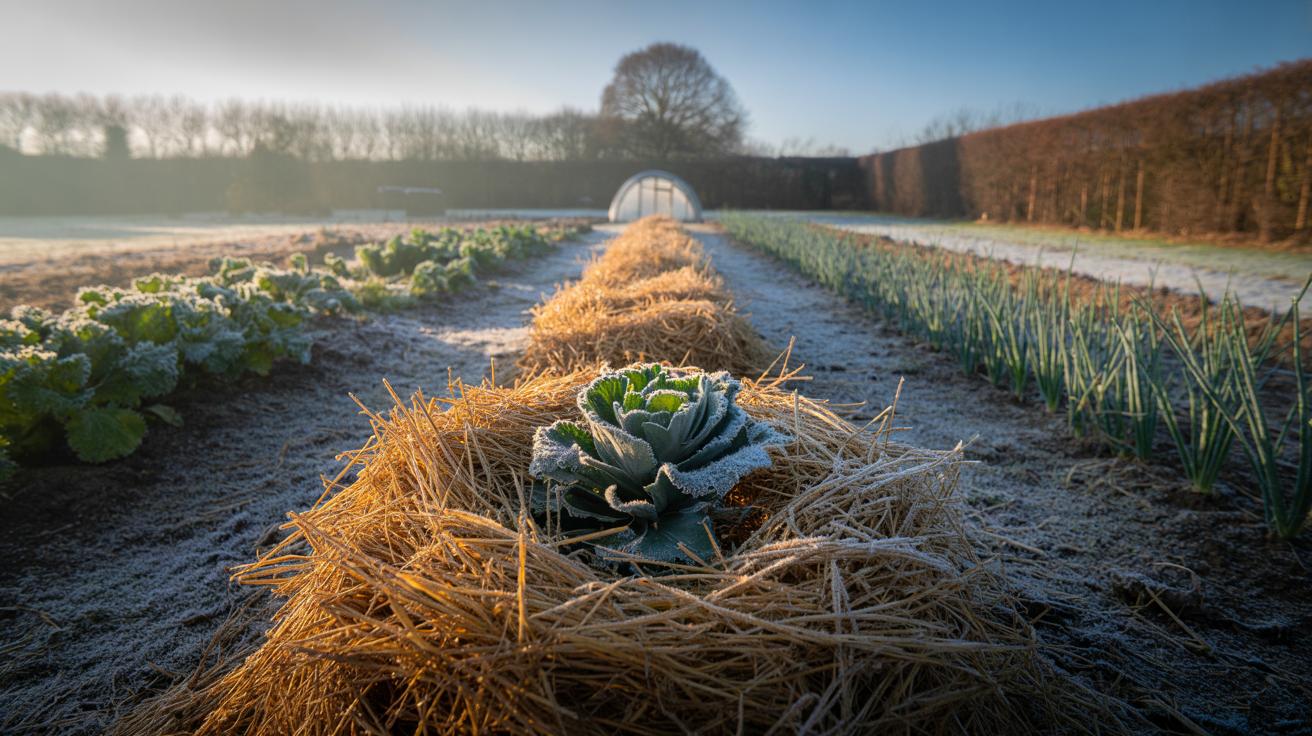
Straw is a high-performance insulator disguised as rustic mulch. Its hollow stems trap pockets of air, and air is the real insulator. Pack those pockets together and you create countless micro-barriers to conductive and convective heat loss. Lay straw over soil and it forms a porous quilt that keeps warmth where plants need it most: around root zones and at the interface between soil and night air. This simple layer slows the rate at which heat escapes after sunset. The result is a gentler temperature curve, not a brutal cliff.
Cold damage is a physics problem. Heat moves by conduction through solids, by convection via moving air, and by radiation to the clear night sky. Straw disrupts all three. Its tangle reduces air movement at the surface, thickening the boundary layer and throttling convective losses. Its pale, reflective fibres temper radiative cooling. It also helps soil retain daytime energy stored in its thermal mass. Add in moisture moderation and you reduce ice-crystal spikes in exposed tissue. Less exposure, fewer ice nucleation sites, less rupture.
In trials and gardens alike, 5–10 cm of straw mulch can lift minimum near-ground temperatures by 1–3°C on radiation-frost nights. That small margin is decisive. It can be the difference between blackened tips and intact buds, between split beetroot and harvestable roots. Think of straw as thermal armor: light, breathable, and surprisingly tough.
Understanding Frost Physics at Soil Level
Not all frosts are born equal. Radiation frost arrives on clear, still nights when heat radiates into space and surfaces overcool; advection frost blows in with frigid air masses and wind-chill. Gardeners feel both. Plants do, too. Straw helps most on radiation nights by curbing sky-facing losses and holding a cushion of warmer air at the soil surface. Even a modest buffer can keep leaf temperatures just above the ice threshold. In exposed sites, pairing straw with windbreaks reduces advection stress as well.
Inside a plant, damage begins when extracellular ice forms, pulling water from cells and collapsing membranes. Repeated freeze–thaw cycles compound harm. Straw reduces the amplitude of those cycles in the rhizosphere, which keeps crowns hydrated and cell walls intact. It also steadies soil moisture, limiting frost heave that can lever shallow-rooted perennials from the ground. Stability is the goal, not absolute warmth.
Microtopography matters. Cold air drains downhill and pools in dips. Bare soil radiates faster than covered soil. By blanketing beds, straw evens out these microclimates, narrowing the temperature gap between hollows and ridges. Combine that with the soil’s stored daytime heat and you create a microclimate that’s a fraction warmer, markedly steadier, and far less lethal to tender crowns and overwintering roots.
Practical Methods for Straw Insulation
Timing is critical. Apply a loose layer once soil has cooled in late autumn but before the first hard frost, avoiding heavy, wet applications. Aim for 5–8 cm around hardy perennials and up to 10–12 cm over tender crowns such as dahlias, but keep a small moat around stems to prevent rot. Avoid compressing the straw; trapped air is the insulator. In very cold snaps, top up or combine with fleece or cloches for a layered defense. Remove or thin the mulch in early spring as growth restarts.
| Plant/Stage | Minimum Forecast | Straw Depth | Notes |
|---|---|---|---|
| New perennials | -2 to -4°C | 5–8 cm | Leave crown gap to ventilate |
| Winter veg (leeks, carrots) | -4 to -6°C | 6–10 cm | Makes harvest easier in frozen soil |
| Tender crowns (dahlias) | -2°C and below | 10–12 cm | Pair with fleece in exposed sites |
| Containers | -1 to -3°C | Wrap sides + 5 cm top | Raise pots off ground |
| Seedlings under cloches | 0 to -2°C | 2–4 cm | Vent on mild days |
Water deeply before a freeze to exploit water’s high specific heat, then mulch. Dry, cold soil swings hard; moist soil buffers. Check after storms, fluffing compacted patches so the texture stays springy. Breathability prevents fungal issues and preserves that crucial boundary layer of still air at the surface.
Common Mistakes and How to Avoid Them
Smothering kills. Don’t pile straw directly onto soft crowns or evergreen rosettes. Keep a 3–5 cm ring clear so condensate can escape and stems breathe. If the mulch feels soggy and dense, it’s hurting more than helping. Shake and lighten it. Use clean, seed-light straw rather than hay; hay introduces weeds and holds more moisture. Wet straw conducts heat away faster and invites rot.
Rodents and slugs love cosy gaps. Reduce habitat by avoiding deep, continuous blankets along fence lines, and by lifting bird feeders away from mulched beds. Inspect frequently and set traps if gnawing is evident near fruit trees. Where advection frost is common, add windbreaks; straw alone won’t stop desiccation in a gale. Pairing with horticultural fleece or cloches creates multi-layer protection that excels in both still and windy freezes.
Finally, don’t delay removal in spring. As daylength climbs, trapped humidity can spur fungal disease and encourage soft, etiolated growth. Rake back in stages, letting plants harden off. Reuse sound straw as pathway mulch or compost carbon. The discipline is simple: dry straw, airy structure, correct depth, timely exit. Get those right and you bank winter resilience while setting the stage for vigorous spring growth.
Straw won’t make frost vanish, but it bends the curve. It slows heat loss, evens microclimates, and shields roots from the worst swings that winter throws at British gardens. Done well, it’s a low-cost, low-tech fix with outsized returns: healthier crowns, intact buds, easier harvests, and fewer spring regrets. Insulation is insurance. One bale can rescue an entire border when the forecast sours. As temperatures wobble this season, how will you layer straw and other tools to build the most reliable cold-weather protection for your plants?
Did you like it?4.5/5 (21)