In a nutshell
- 🧂 The salt trick works fast: crystals draw liquid via capillary action and an osmotic pull, forming a brine that halts spread within the crucial five-minute window.
- 🧽 Method matters: Blot—don’t rub, heap salt to cover, wait 5–10 minutes, lift and vacuum; then mist with cool water or white vinegar (test for colourfastness) and blot again.
- 🍷 Best targets are water-based spills like red wine, coffee, tea, juice, and fresh blood; limited effect on oil/grease, which need baking soda or detergent steps.
- 🧪 When salt isn’t enough, pair with club soda, baking soda, or enzyme cleaners; use diluted hydrogen peroxide on synthetics only, and never mix peroxide with vinegar.
- 🔥 Avoid common pitfalls: heat sets stains, don’t crush crystals underfoot, and consider a wet extractor for deep pile; always test first and escalate gently.
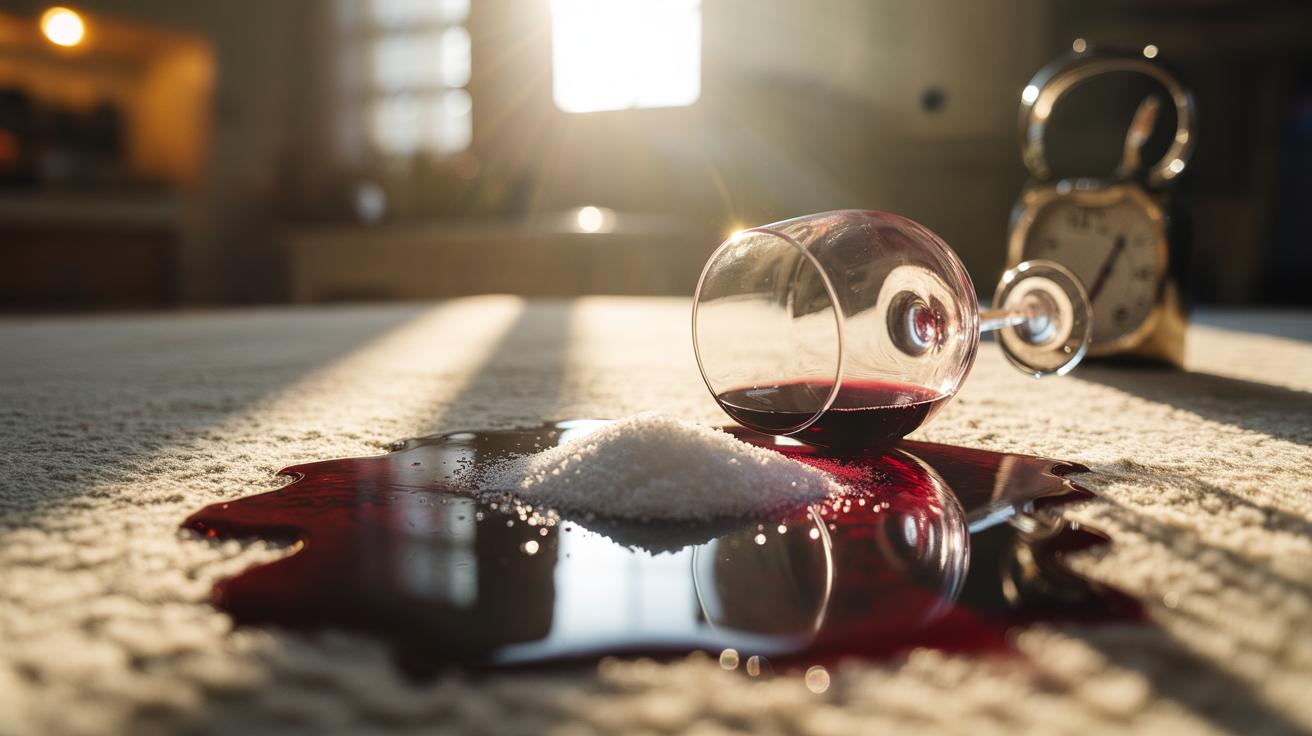
Spills on carpet feel like a countdown. Red wine spreads, coffee edges darken, and panic rises as the blot grows. There is, however, a cheap, fast, almost magical fix sitting in your cupboard: salt. When used quickly and generously, its crystals gulp liquid, pulling it up and away from fibres. In as little as five minutes, the damage can be halted, often reversed. The trick? Timing, coverage, and patience. Act before the spill dries. Heap the salt. Let physics do the heavy lifting while you resist the urge to scrub. Here’s how this unassuming mineral wages a quiet war against stains—and wins.
The Science: Why Salt Works in Five Minutes
Table salt—sodium chloride—doesn’t just season dinner. Its crystals behave like tiny reservoirs. Spread across a wet patch, they create countless contact points where moisture is drawn in and held. Think of it as a city of caverns: liquid wicks into the gaps between crystals via capillary action, then is locked as a shallow brine forms on the surface. That brine, denser than the original spill, slows further penetration into carpet pile and padding.
There’s also a push-pull dynamic at play. The high concentration of dissolved ions at the crystal surface exerts an osmotic effect, encouraging water molecules to migrate out of the fibres and into the salt bed. Coarse crystals create airflow between grains; fine ones offer greater surface area. A 50:50 mix is ideal—fast wicking plus fast binding. Speed is everything in the first five minutes. Once sugars, tannins, or dyes set, extraction gets harder.
Importantly, salt is inert and non-bleaching, so it’s safer than panic measures like hot water, which can set proteins, or random sprays that might fix dyes. Used promptly, it halts spread, buys time, and often lifts visible colour before it becomes a permanent reminder of a clumsy moment.
Step-By-Step: From Spill to Clean
First, breathe. Then move. Do not rub. Rubbing drives pigment deeper and abrades delicate fibres. Instead, gently blot the spill with a clean, white cloth to remove loose liquid. Press, lift, rotate the cloth, repeat. When the cloth comes up damp but not soaked, you’re ready for salt.
Pour a generous mound of salt directly onto the spill—enough to cover and overlap the stain by at least a centimetre. You want a visible crust. For larger puddles, use a shallow layer first, let it drink, then top up. Leave the salt in place for five to ten minutes. In that window, the crystals pull up moisture and much of the pigment. Walking on it will crush crystals and reduce wicking, so cordon off the area.
After the wait, use a spoon to lift the damp, pink-tinged (or brown-tinged) salt into a dustpan. Vacuum thoroughly to remove fine residue. Inspect. If colour remains, repeat the pour-and-wait once. Then, lightly mist with cool water or a 1:4 white vinegar solution (test first for colourfastness), blot again, and dry with a fan. For wool, keep solutions mild and cool; for synthetic fibres, a second vinegar mist aids odour control and re-softens pile.
What Stains Respond Best to Salt
Salt shines with water-based spills. Red wine, fruit juice, beer, tea, black coffee, and fresh mud—these are prime candidates. It’s also useful with protein-based spills like blood if you act immediately with cold applications only. For pet accidents, salt can curb spread and initial odour, but follow swiftly with an enzyme cleaner to break down uric compounds. Oil and grease are different beasts; salt struggles because it doesn’t absorb lipids effectively.
| Spill Type | Why Salt Helps | How Much | Dwell Time | Follow-Up |
|---|---|---|---|---|
| Red wine/juice | Wicks liquid, slows dye set | Thick crust | 5–10 mins | Vinegar mist, blot, vacuum |
| Coffee/tea | Absorbs tannin-laden water | Generous layer | 8–10 mins | Cool water rinse, blot |
| Blood (fresh) | Cold extraction prevents setting | Moderate | 5–7 mins | Cold water only, repeat |
| Oil/grease | Limited effect | Light dusting | 5 mins | Baking soda first, then detergent |
A quick caveat. Bright, unstable dyes in some rugs can migrate when wet. Always test a discreet corner with your chosen follow-up solution. And on deep-pile carpets, consider a wet-dry vacuum after the salt step to remove brine lurking under the surface. It’s simple, quick, and often astonishingly effective.
When Salt Isn’t Enough: Pairing With Other Helpers
Some stains dig in. Aged spills, high-sugar syrups, or turmeric-heavy curries resist a single tactic. That’s when you pair salt with targeted allies. After the initial salt extraction, mist club soda to add gentle carbonation that lifts particles without harsh chemistry. For lingering wine halos, a diluted hydrogen peroxide solution (3% strength, 1:3 with water) can brighten synthetics—test first and avoid wool. Never mix peroxide and vinegar in the carpet; alternate, rinse, and blot between steps.
Oil-based disasters respond to a different plan. Cover with baking soda or cornstarch for 15 minutes to draw fats, vacuum, then apply a drop of clear washing-up liquid in cool water. Blot, don’t scrub. For odours from pet accidents, an enzyme cleaner breaks down compounds salt can’t touch. If padding is saturated, a wet extractor or professional intervention prevents wicking back and future smells.
Set a simple rule: escalate methodically. Start with salt for fast triage. Move to mild acids (vinegar) or oxygen-based brighteners (peroxide) only after testing. Keep heat out of the equation until the stain is gone. Heat sets stains, especially proteins and tannins. With that discipline, you preserve colour, pile integrity, and your sanity.
Salt won’t fix every mishap, but its speed and simplicity make it a first responder your carpet deserves. Those crystalline granules buy you time, halt spread, and lift colour before panic hardens into permanence. Keep a jar near the dining table. Label a small spoon “stain duty.” The next time a glass tips or a mug sloshes, you’ll move calmly and win the five-minute race. What stubborn spill has beaten you before, and how will you try the salt-first playbook differently next time?
Did you like it?4.5/5 (26)