In a nutshell
- ✨ Baking soda cleans grout fast by combining mild alkalinity with gentle abrasion, lifting soap scum, oils, and odours without scratching tiles.
- ⏱️ The five-minute method: mix a 3:1 baking soda:water paste, apply with a brush, 2 minutes dwell, 2 minutes scrub, 1 minute rinse, then wipe with microfibre.
- 🧪 For stubborn stains, use 3% hydrogen peroxide for mould/mildew and cautious vinegar for limescale; never mix them, avoid acids on natural stone, and patch-test coloured grout.
- 🛡️ Protect results with a penetrating grout sealer after 24 hours’ drying; maintain with quick soda spot-cleans and a post-shower squeegee to keep lines bright.
- 🧰 Troubleshoot by re-misting dried paste, re-rinsing haze, and repairing worn joints; boost efficiency with an electric toothbrush, good ventilation, gloves, and a simple bathroom cleaning caddy.
Your bathroom tiles can look tired long before they’re truly worn. The culprit is often the grout: porous, gritty lines that trap soap scum, body oils, and limescale. Here’s the good news. With a pot of baking soda (bicarbonate of soda), a splash of water, and a small brush, you can restore that crisp, just-tiled look in minutes. No harsh fumes, no pricey speciality gels. Done right, this quick method lifts grime fast and leaves the room smelling clean, not chemical. Below, a science-backed routine, timed to five focused minutes, plus smart tweaks for stains, sealing, and long-term protection.
Why Baking Soda Works on Grout
Baking soda is a mild alkali and a gentle abrasive. That dual action matters. The slight grittiness agitates dirt lodged in grout pores, while the higher pH helps break down the acidic films left by shampoos and urban hard water. Grout, typically cement-based, is micro-textured; it catches residue that flat tiles shed. Think of soda as a precision scrub that won’t scratch glazed ceramic or porcelain. It’s tough on grime, kind on finishes.
There’s chemistry at play, but it’s simple: oils and soap scum loosen when the environment isn’t acidic. Water activates the powder into a paste that clings to vertical joints, so product stays where the dirt lives. In five focused minutes, baking soda can lift years of dullness without resorting to bleach. It also helps neutralise odours, so the clean you see is matched by a clean you smell.
It’s also practical. Bicarbonate is inexpensive, available in every supermarket, and stores neatly with no special handling. For households sensitive to harsh cleaners, it’s a relief: low fumes, low risk of discolouring coloured grout, and easy rinsing. Pair it with a soft grout brush or an old toothbrush and you’ve got an agile, precise cleaning kit.
The Five-Minute Method, Step by Step
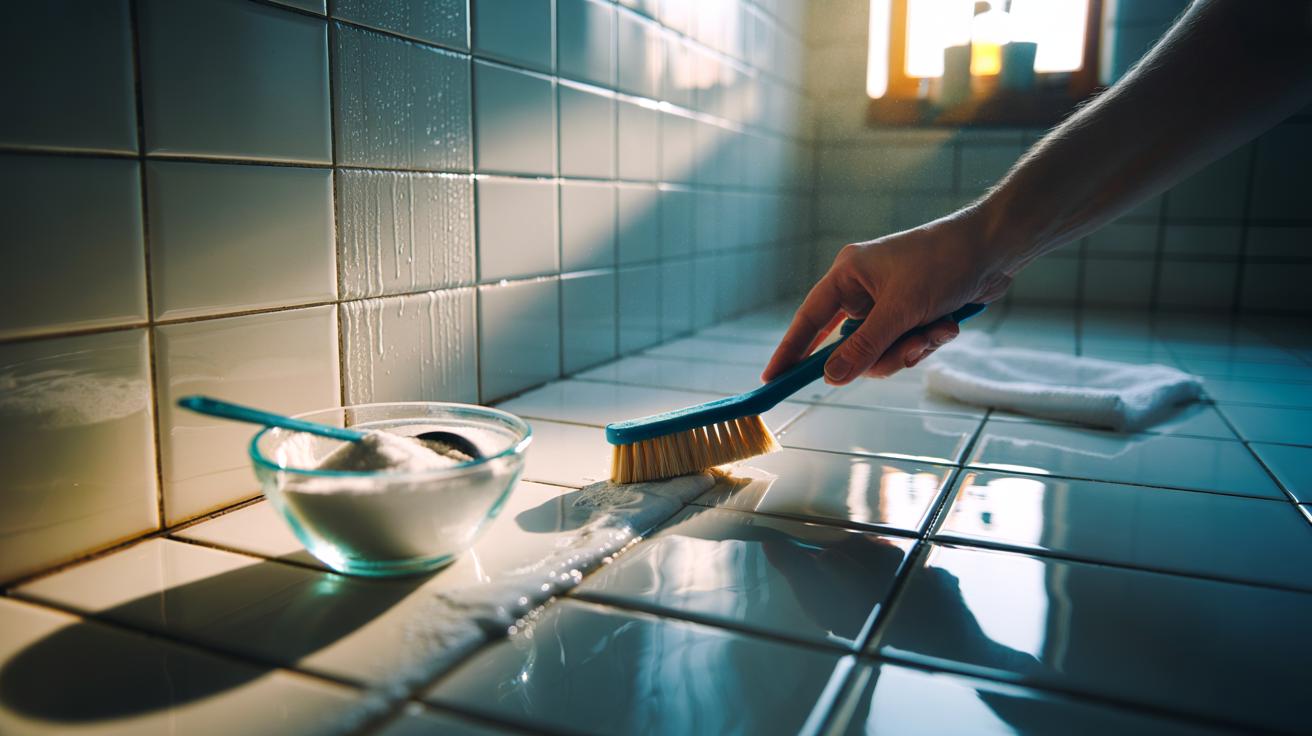
Time it. That’s how you keep this fast. First, mix a paste: three parts baking soda to one part water. You want spreadable icing, not soup. Lightly mist the grout lines so they’re damp, not flooded. Apply the paste along each line with your brush, working a metre at a time. Contact time is your secret weapon. Let it sit for two minutes; that’s when the pH shift loosens grime.
Now scrub for two minutes. Short, firm strokes, staying on the grout rather than the tile glaze. A dedicated grout brush speeds coverage, but a toothbrush works fine. Rinse the brush occasionally to avoid redepositing grey sludge. For the final minute, rinse with warm water and wipe with a microfibre cloth, following the grout lines so residue lifts away.
If you like to plan, this quick-reference table helps:
| Task | Ratio/Tool | Time |
|---|---|---|
| Make paste | 3:1 baking soda:water | 30 seconds |
| Dwell on grout | Thin, even layer | 2 minutes |
| Scrub | Grout brush/toothbrush | 2 minutes |
| Rinse and wipe | Warm water + microfibre | 1 minute |
Work in small sections to maintain consistent dwell time and avoid drying. Keep the room ventilated and wear light gloves if you have sensitive skin. On natural stone tiles, avoid acidic rinses and keep paste on grout only.
Tackling Stubborn Stains and Protecting Grout
Some stains need an upgrade. For grey, organic discolouration (mould/mildew stains), dab 3% hydrogen peroxide onto the dry grout, let it sit for 5–10 minutes, then apply your baking soda paste and scrub. The fizzing action you may see is oxygen release—helpful for lifting stains. For limescale halos, you can follow the soda scrub with a brief wipe of white vinegar on the tile surface only (avoid prolonged contact with grout if it’s unsealed). Rinse thoroughly.
Never combine hydrogen peroxide and vinegar in the same container; used sequentially with a rinse in between is the safe route. Avoid any acid, including vinegar, on marble, limestone, or travertine—these stones can etch. If your grout is coloured or recently dyed, test a hidden corner first. A patch test takes moments and can save a headache.
Once clean, protect it. A penetrating grout sealer makes future grime less sticky and reduces water ingress, which slows mould growth. Apply after the lines are bone dry (usually 24 hours). Maintenance becomes a breeze: a quick soda spot-clean monthly, then a squeegee after showers. Sealed grout stays brighter for longer, and you spend less time scrubbing.
Troubleshooting, Safety, and Time-Saving Tricks
If paste dries before you scrub, lightly mist with water and continue. Persistent orange or pink biofilm? Increase dwell time by a minute and use slightly stiffer bristles. For heavy buildup, an electric toothbrush with a retired head is a superb micro-scrubber. Keep movement controlled to avoid flicking paste across the room.
Smoky grey haze after cleaning usually means residue. Rinse once more and buff tiles with a dry microfibre. If joints look patchy, they may be eroded; cleaning can reveal wear. Consider regrouting narrow gaps or topping up with grout repair compound before sealing. Cleaners restore appearance, but only intact grout can stay clean easily.
Safety is simple: use gloves if your skin’s delicate; ventilate; never mix chemicals in one bottle. Stick to supermarket-strength ingredients—baking soda, 3% peroxide, household vinegar—applied thoughtfully. To save time week to week, keep a small caddy in the bathroom: soda in a shaker jar, a brush, a spray bottle of water. Two minutes after a steamy shower is perfect—the warmth helps the paste spread and lift grime fast.
This tiny ritual respects both science and sanity: a quick pH nudge, a little abrasion, and a thorough rinse. The reward is immediate—brighter grout, tiles that gleam, a bathroom that smells genuinely fresh. In just five minutes, your wall or floor can look newly installed. Will you try the pure baking soda paste first, or add a stain-busting step with peroxide on the most stubborn lines to see how far you can push that like-new shine?
Did you like it?4.5/5 (22)