In a nutshell
- 🍋 Why streak-free: citric acid chelates mineral deposits and loosens oils, while the low-solid formula evaporates cleanly when you filter, dilute, and buff.
- 🔧 Mix and apply: Filter pulp, then combine 1 tbsp lemon juice with 250 ml distilled water (≈1:16), optional isopropyl alcohol; fine-mist, wipe horizontally, then buff vertically with minimal liquid.
- 🧪 Science of no residue: Distilled water prevents new spots, trace sugars are highly diluted and removed during the dry buff, and volatile aroma compounds dissipate instead of filming.
- 🧼 Tools and technique: Use a 300–350 GSM microfibre for wiping and a second dry cloth for the polish—two-cloth method yields an optical, streak-free finish.
- ⚠️ Troubleshooting and safety: Streaks signal over-spray or a softener-tainted cloth; switch cloths and lighten the mist, pre-clean silicone/hairspray, keep acids off marble, and test anti-fog coatings.
Lemon has a reputation for sparkle, but when it comes to glass it’s the absence of residue that really impresses. A splash of fresh juice, properly diluted and filtered, can cut through hazy films and lift fingerprints without leaving the tell-tale smears that many cleaners do. The secret is chemistry, not folklore. Citric acid chelates minerals, the light acidity loosens grime, and the watery base evaporates cleanly when you finish with a crisp buff. Used correctly, a lemon mix is both nimble and forgiving. It’s also low-cost, biodegradable, and pleasantly fragrant. Streak-free mirrors, with a zesty flourish—and no dulling afterglow.
Why Lemon Leaves Mirrors Streak-Free
Streaks are usually solids left behind. Soap residue. Hard-water minerals. Oily fingerprints smeared thin rather than removed. Lemon short-circuits all three. Its principal actor, citric acid, binds to calcium and magnesium ions—the usual culprits in chalky water spots—so they lift, disperse, and wipe away cleanly. The juice is largely water, so there’s no heavy polymer or surfactant load to dry into a film. That means fewer solids are left to catch the light and betray your hard work.
There’s more at play. Natural acidity breaks the weak bonds that hold skin oils to glass, while the juice’s ultra-low viscosity lets the solution spread evenly, wetting the surface without beading. Because the mixture is simple—water and a small amount of acid—evaporation is faster and cleaner than many scented sprays. Straining removes pulp and zest, eliminating microscopic fibers and oils that can smear. Microfibre cloths then finish the job, mechanically polishing the mirror to an optical sheen.
One caveat: sugar exists in lemon juice, but at low levels. Dilution reduces it to near-vanishing amounts, and a dry buff removes any trace. Filter, dilute, and buff: that’s the residue-proof trifecta.
How To Mix and Apply the Zesty Solution
Go light, go clean. Start by juicing half a lemon and running it through a fine sieve, then a coffee filter. You want clarity—no pips, no pulp. Mix roughly 1 tablespoon of filtered juice into 250 ml of distilled water (about a 1:16 ratio). For a faster dry on humid days, add 1–2 teaspoons of isopropyl alcohol. This is optional but helpful. Decant into a fine-mist sprayer.
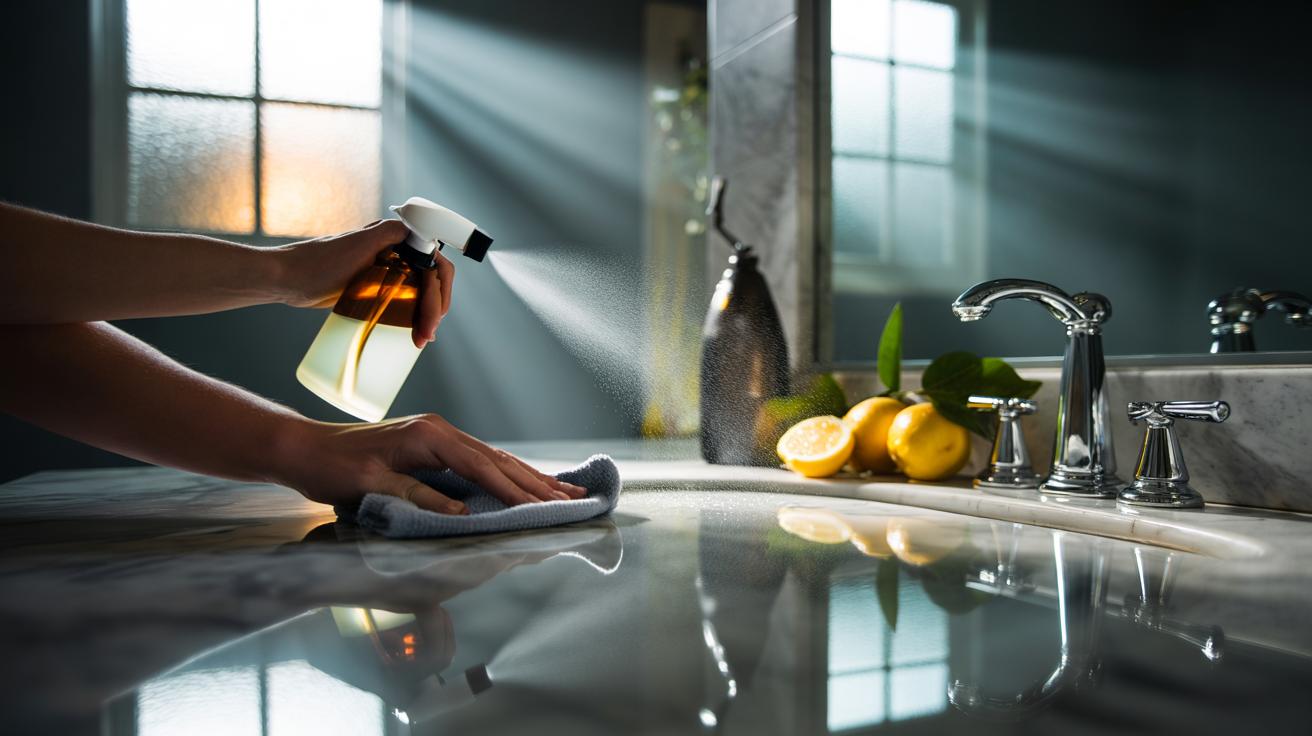
Technique matters. Mist the mirror lightly; if it’s dripping, you’ve sprayed too much. With a clean, tight-weave microfibre, wipe in overlapping horizontal strokes from top to bottom. Flip to a dry section, then buff vertically. The crosshatch motion prevents track marks. For stubborn makeup or toothpaste flecks, dab with a corner of the cloth dampened in the mix before your main passes. If you’re dealing with a bathroom mirror, run a hot shower for a minute to fog lightly; the faint condensation can help show where you’ve missed.
Avoid frames made of unfinished wood or stone—mask them with a towel. Keep the solution away from the mirror’s backing and edges to prevent wicking. Less liquid, more buffing. That’s the streak-free rule.
The Science of No Residue: Breaking It Down
Lemon works because it leaves almost nothing behind once you dilute and wipe properly. Compare that with standard glass cleaners, which often rely on detergents, solvents, and fragrance compounds that can dry into a microfilm if overapplied or poorly buffed. Below is a quick guide to what’s in your citrus spritz—and why it doesn’t smear.
| Component | Role | Why No Residue |
|---|---|---|
| Citric acid | Chelates minerals; loosens alkaline film | Low dose; fully water-soluble; wipes away |
| Water (distilled) | Carrier; dissolves soils | No minerals to spot; evaporates cleanly |
| Trace sugars | Natural in juice | Highly diluted; removed by dry buff |
| Volatile aroma compounds | Fresh scent | Present in minute amounts; dissipate |
Distilled water is the quiet hero. By eliminating calcium and magnesium at the source, you stop new mineral films forming while you clean. Filtering the juice removes the physical particles most likely to smear. The rest is mechanical: a good cloth and a patient buff. Done right, you’re left with glass, not residue. That’s why mirrors look crisper, edges sharper, reflections truer.
Troubleshooting: Streaks, Smears, and Safety
Seeing streaks? Diagnose the cause. If the cloth drags, you’re using too much solution. Lighten the mist and switch to a fresh, dry section for the final pass. If you spot cloudy bands, your cloth may be contaminated with fabric softener, which leaves waxy films—wash microfibres with fragrance-free detergent only. Silvery halos often point to hard water; switch to distilled water immediately. Concentration counts: if you used a strong mix, dilute further to reduce sugars and acidity.
Smears that reappear after buffing can be silicone or hairspray build-up, common in bathrooms. Pre-clean those zones with a tiny drop of washing-up liquid on a damp cloth, rinse with distilled water, then go in with your lemon spritz. For antique mirrors or those with damaged backings, keep liquids strictly away from edges to avoid creep behind the glass. Avoid spraying near marble sills; acids etch stone. And for coated, anti-fog mirrors, test a corner first.
Above all, use quality tools: a 300–350 GSM microfibre for wipe, a separate, ultra-dry cloth for the polish. Two cloths, minimal product, maximum sheen. That’s your professional finish.
In a world of over-scented sprays and complex formulas, the humble lemon delivers a crisp, glass-true result with almost nothing left behind. Filter the juice, dilute it well, and trust a meticulous buff to erase the final trace. The payoff is immediate: brighter reflections, cleaner edges, and a bathroom that smells like a Sicilian market, not a lab. Simple chemistry, elegantly applied. Will you try the lemon method on your mirror this week—and what tweaks will you make to perfect your own streak-free ritual?
Did you like it?4.4/5 (27)