In a nutshell
- ⚗️ Baking soda (bicarbonate of soda) neutralises acidic odours and leverages adsorption to trap volatile molecules in the top carpet pile for rapid freshness.
- 🕒 Follow the 10-minute routine: aerate, dust a thin even layer, allow a 5–7 minute dwell, then vacuum slowly with overlapping north–south and east–west passes.
- 🧰 Equip for speed: a shaker of fine baking soda, a hand brush, and a clean-filter vacuum; aim for light coverage (about a teaspoon per square foot) for efficient results.
- ⚠️ Mind safety and limits: test dark fibres, avoid vinegar/lemon moisture, and treat greasy or pet sources with enzymatic or solvent cleaners before re-dusting.
- 🌬️ Sustain results: ventilate during and after, empty bagless canisters promptly, and do a brief weekly dust-and-vac to prevent build-up and wick-back.
Guests at the door. A whiff of dog, yesterday’s takeaway, or a suspicious dampness hangs in the air. Panic? Not necessary. With a pot of baking soda — known in Britain as bicarbonate of soda — you can cut through carpet odours in minutes, leaving rooms fresher and calmer. This quick method leans on chemistry as much as common sense, using a fine powder that grabs volatile molecules before they reach your nose. It’s dry, safe on most fibres, and delightfully cheap. In around 10 minutes you can obliterate everyday smells enough to pass the living-room sniff test, while setting yourself up for a deeper clean later if needed.
How Baking Soda Neutralises Odors Fast
Think of bicarbonate of soda as a quiet bouncer for unruly smells. Many odour compounds are acidic; bicarbonate is mildly alkaline. When the two meet, chemistry happens: molecules are neutralised or trapped, reducing their volatility. The powder’s microscopic, porous structure also excels at adsorption, clinging to airborne offenders the way a sponge holds water. That dual action, chemical and physical, is why the fix feels instant.
Speed matters. Odours waft from the top few millimetres of pile, where food spills, pet dander, and humidity mingle. A fast dusting of fine baking soda, brushed lightly across the nap, captures a high proportion of those upper-layer molecules long before they diffuse. When the smell source is recent or superficial, a short dwell — five to seven minutes — can be enough to tame it dramatically. Deep, old, or greasy sources need longer contact, but when you’ve got company waiting, you’re targeting the air-facing layer first.
There’s also a mechanical win. As you agitate and vacuum, you remove hair, lint, and the dust that acts like a taxi for smells. Combine adsorption with extraction, and the room’s perceived freshness jumps, fast.
The 10-Minute Carpet Deodorising Routine
Minute 0–2: Aerate. Open a window or two and kick the fan on low. Fresh airflow moves volatile compounds away while you work, and it speeds up the baking soda’s interception job. Quickly pick up obvious debris that could mask the powder.
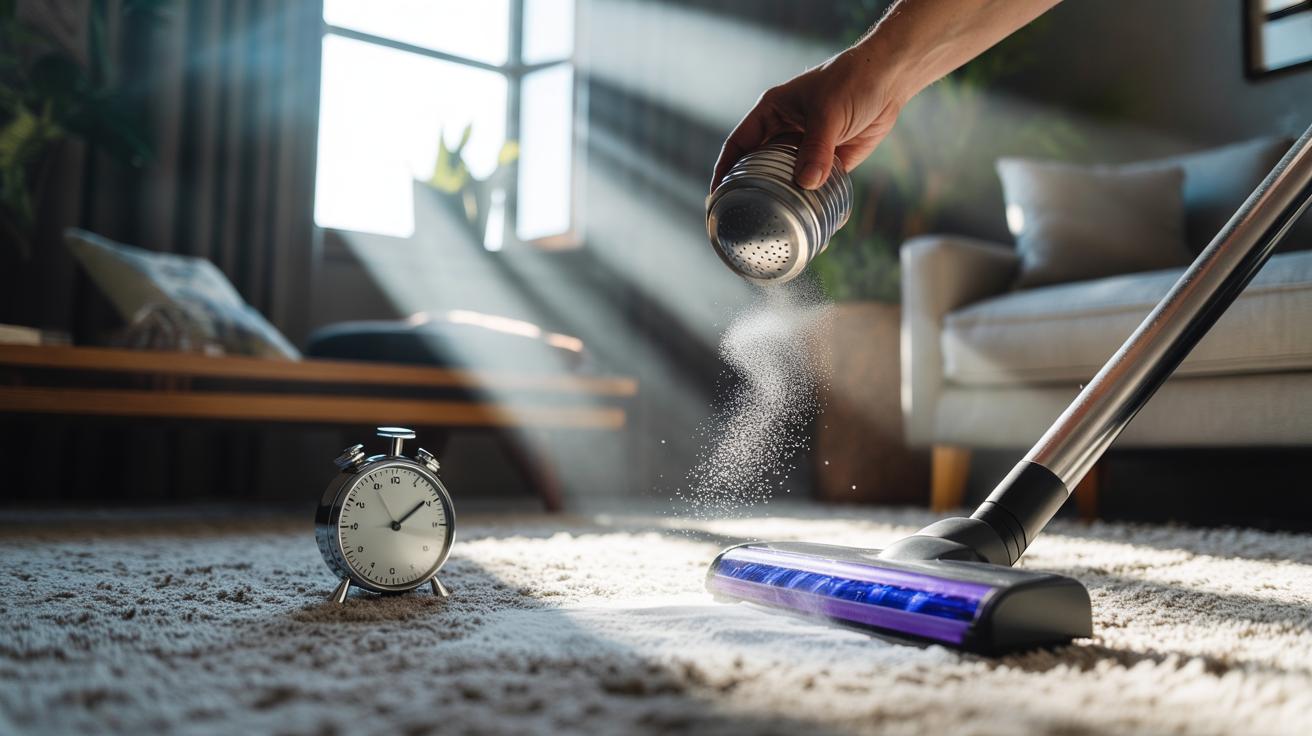
Minute 2–4: Dust and dress the pile. Shake a thin, even layer of bicarbonate of soda over the smelly zone — about a teaspoon per square foot for a quick fix. Use a soft brush, clean shoe, or your palm in a glove to sweep it both with and against the grain so particles sit on, and just inside, the fibres. Light coverage beats heavy clumps, which waste product and slow the vacuum.
Minute 4–7: Let it dwell. Leave the powder to sit for five minutes. That’s the sweet spot for superficial odours. Minute 7–10: Vacuum methodically, slow passes, overlapping by half. Do two passes north–south, then two east–west. If your machine has a beater bar, use it; if not, go slower. Pop a teaspoon of baking soda into the bag or canister to keep machine exhaust fresher. By the time you click the vacuum off, most everyday smells will have fallen silent.
Tools, Quantities, and Timing at a Glance
The technique is simple, but precision helps when you’re racing the clock. Keep a shaker-tub of fine baking soda ready — finer grains cover more evenly and work faster. A firm hand brush, a reliable vacuum with a clean filter, and a timer are your allies. Aim for light, even coverage and disciplined vacuuming. The numbers below keep you on track.
| Area | Baking Soda Amount | Quick Dwell | Vacuum Passes | Result Expectation |
|---|---|---|---|---|
| 1 m² spot | 1–2 tsp | 5–7 min | 4 directional | Noticeably fresher |
| Room (12 m²) | 3–4 tbsp | 7–10 min | 2 slow per lane | Air reset |
| Pet accident area | 2–3 tsp | 10–15 min | Extra slow | Marked reduction |
If the smell persists after a precise 10-minute pass, repeat once or extend the dwell — severity, not effort, tends to be the limiting factor. Always empty a bagless canister promptly; warm, trapped dust can re-odour a room.
Safety, Stain Risks, and When to Go Deeper
Bicarbonate of soda is gentle. It’s non-toxic, non-bleaching, and safe for wool, nylon, and most synthetics when used dry. Still, test in a discreet corner if your carpet is dark or silk-blended; fine powder can sometimes leave a pale cast if over-applied. A light hand is the professional’s secret. Avoid adding vinegar or lemon at this stage — fizzing neutralises the very alkalinity you need and introduces moisture that can carry odours deeper.
Beware oily residues. Old curry, spilt gravy, or pet glands lay down lipids that shield odour molecules. Baking soda will mute the smell quickly, but the source remains. In such cases, plan a phase two: a targeted enzymatic cleaner for organics, or a low-moisture solvent spotter for grease, both followed by a fresh baking soda dusting and vacuum once dry. Keep water to a minimum to prevent wick-back.
Timing tips matter. Evening guests? Do the 10-minute pass an hour ahead, then crack a window. Morning pet odour? Quick pass, school run, repeat after. If the carpet smells clean but the room doesn’t, inspect soft furnishings and the vacuum filter — odours often migrate. Consistency wins: a weekly light dust-and-vac prevents build-up, so emergencies stay easy.
In a world of sprays that mask and mists that mingle, this one powder delivers a swift, quiet victory. You don’t need gadgets. You don’t need fragrance clouds. Just a shaker, a brush, and disciplined vacuuming. Baking soda neutralises, lifts, and restores confidence when time is short and noses are sharp. Ten minutes won’t rebuild a flood-damaged underlay, but it will disarm the everyday odours that make homes feel less than their best. What room will you rescue first, and how will you tailor the routine to your own floors, pets, and timetable?
Did you like it?4.4/5 (20)