In a nutshell
- ⚗️ The science: acetic acid in vinegar protonates smelly bases (amines, ammonia), creating less volatile salts, so odours genuinely vanish—often in about 30 seconds rather than being perfumed over.
- ⏱️ The 30‑second method: use a fine mist of white distilled vinegar (1:1 for strong smells, 1:2 for routine), spray above the source, wipe the surface, and ventilate; fabrics get a light mist and patch-test first.
- 🧴 Picking the right vinegar: choose white for neutral results, apple cider vinegar for brief fruity notes, and malt for drains/outdoor bins; avoid dark, sugary vinegars that may stain.
- 🧪 Safety and materials: never mix vinegar with bleach or hydrogen peroxide; avoid natural stone, unsealed wood, and electronics; rinse food-contact areas and keep pets away while spraying.
- 🗂️ Practical cheatsheet: ratios for air, surfaces, fabrics, drains (neat), and fridges; quick wins for bins, boards, and bathrooms—while recognising deep smoke or mould needs specialist treatment.
There’s a simple, swift way to banish stubborn smells without synthetic fragrances or pricey gadgets. Reach for vinegar. This humble bottle hides real chemistry, not perfume. Atomised lightly into the air or wiped across the offending surface, it tackles many household odours fast. Very fast. In typical kitchen and bathroom scenarios, noticeable odours can drop dramatically in around 30 seconds. That speed surprises people, yet it’s entirely explainable: acetic acid changes the volatility and reactivity of common smell molecules. It’s cheap, safe when used correctly, and widely available. Here’s how the 30‑second method works, why it works, and when to pick white, malt, or apple cider vinegar for best results.
The Chemistry Behind Vinegar’s Rapid Deodorising Power
Vinegar’s punch comes from its active ingredient: acetic acid (CH3COOH). Many nasty domestic odours—think fishy residues, bin funk, stale sweat, cat-box whiffs—are driven by alkaline compounds such as amines or ammonia. Acetic acid donates a proton to these bases, forming non-volatile ammonium or ammonium-like salts. With their volatility reduced, their presence in the air collapses. Fewer molecules reach your nose. Perception changes quickly, often within moments. That’s why a fine mist can make a pungent kitchen feel fresher in half a minute.
There’s more. Acetic acid can disrupt sulphur-containing malodours, reduce basic film on surfaces where smell molecules cling, and cut greasy matrices that trap odourants. Because vinegar itself is volatile, a small initial tang dissipates rapidly, leaving neutral air rather than a perfumed overlay. Crucially, this is not masking; it’s chemical neutralisation plus removal. The caveat: it won’t fix everything. Smoke damage, mould growth, and porous materials soaked in odour need deeper treatment. But for day-to-day smells, the mechanism is direct, fast, and reliable.
The 30-Second Method for Kitchens, Bathrooms, and Fabrics
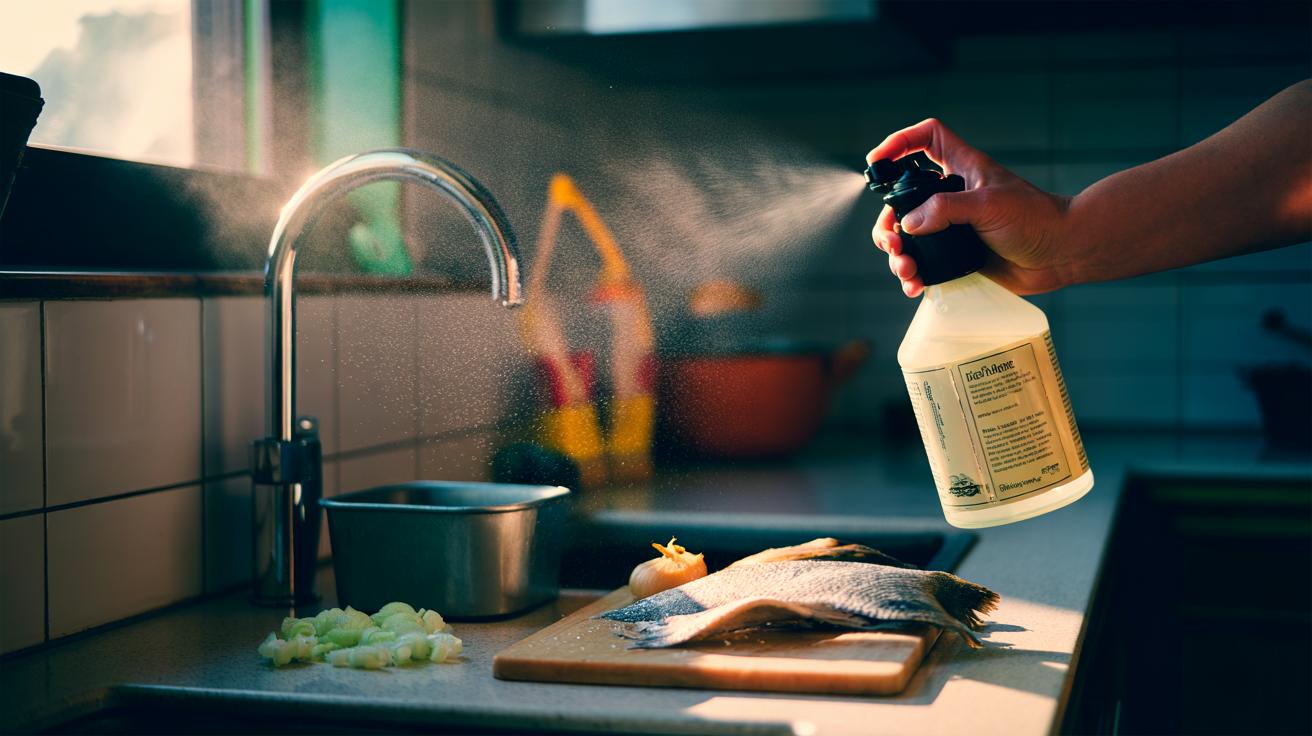
Grab a clean spray bottle and mix white distilled vinegar with water. Aim for a 1:1 ratio for strong odours, 1:2 for routine freshening. Use a fine mist. Two to four sprays into the air above the source—not into your face or directly at pets—then a quick wipe of the culprit surface: chopping boards, bins, counters, loo surrounds. Wait. Within about 30 seconds, ambient odour typically drops to near-neutral. If the smell persists, locate residue and wipe again with the same solution; it’s the surface film that keeps re-emitting volatiles.
Fabrics need care. Lightly mist the air above curtains or upholstery rather than soaking fibres, then ventilate. For clothes, turn them inside out, mist the underarm area sparingly, and let dry. Always patch-test coloured textiles. In bathrooms, spray around the bowl exterior, the floor edges, and sink overflows—hidden biofilms love those areas. For fridges, wipe shelves and seals; don’t drench electrics. Keep the room ventilated and avoid mixing with any other cleaner.
| Task | Vinegar:Water | Notes |
|---|---|---|
| Air freshening near source | 1:2 | Fine mist above the area; avoid electronics. |
| Benchtops, bins, boards | 1:1 | Wipe, then rinse food-contact surfaces. |
| Upholstery, curtains | 1:3 | Patch-test; mist lightly, don’t soak. |
| Drains (odour) | Neat | Pour 100–200 ml, leave 15 min, flush hot water. |
| Fridge interiors | 1:1 | Wipe seals and shelves; air dry. |
When to Use Malt, White, or Apple Cider Vinegar
Not all vinegars smell equal. For neutral results, white distilled vinegar is the workhorse: clear, affordable, and typically 5–8% acetic acid. Choose it when you want no lingering aroma. Apple cider vinegar brings fruitier top notes; helpful when tackling kitchen odours from fish or fried food because the brief apple tang masks the initial acid whiff while chemistry does its job. Malt vinegar is effective but carries a malty aroma that can mislead your nose into thinking the smell remains; use it in well-ventilated spaces or for drains and outdoor bins.
Avoid sugary or dark vinegars, like balsamic, for deodorising—they’re sticky and may stain. Check labels for acidity percentage; stronger solutions work faster but can be harsh on delicate finishes. On stone surfaces containing calcium carbonate—marble, limestone, travertine—acid can etch. Pick pH-neutral cleaners there. Aluminium can dull if left wet; cast iron may rust; some rubber gaskets don’t love prolonged acid contact. The takeaway: match vinegar type to the job, consider the material, and ventilate. You’ll get the speed without side effects.
Safety, Materials, and Common Mistakes
Vinegar is simple, but not a free-for-all. Never mix vinegar with bleach or hydrogen peroxide; both combinations can generate dangerous gases or peracetic acid. Keep sprays away from screens, keyboards, unsealed wood, and natural stone. If you’ve used a bleach-based cleaner earlier, rinse thoroughly with plain water before touching the area with vinegar. For allergy-prone households, test a quick mist and ventilate; the slight acid tang can irritate sensitive noses.
The biggest error is oversaturating. You don’t need puddles. Use a fine mist for the air, a damp—not dripping—cloth for surfaces. Rinse food-contact areas after wiping to remove any lingering taste. Store vinegar in a cool cupboard with a tight cap; contamination dulls performance and can add off-notes. Pets? Keep them out while you spray. Once dry, it’s safe. Finally, be realistic: vinegar eliminates many everyday smells quickly, but it can’t reverse mould colonisation or deeply smoke-impregnated fabrics. Use it as a fast first response, then escalate if needed.
Used thoughtfully, vinegar is a rare household tool that’s cheap, fast, and grounded in science. It doesn’t perfume a problem; it changes the chemistry so the smell stops reaching you. A couple of sprays, a brisk wipe, and the room resets. That’s empowering, especially when guests are minutes away or the bin stinks after a fish supper. Ready to try the 30‑second method in your kitchen, bathroom, or wardrobe—and which tricky odour will you challenge first?
Did you like it?4.7/5 (20)