In a nutshell
- 🐾 A simple rubber band lifts pet hair fast by combining tacky friction with a mild static charge, clumping fibres for easy removal.
- ⚡ Follow short, controlled strokes: band on fingers or over microfibre, work in one direction, lift clumps, then finish with a vacuum for a clean result.
- 🛋️ Best on standard upholstery, car seats, throws, and pet beds; avoid delicate silks and open knits, and test velvet—use a cloth barrier on leather.
- 🧰 Boost efficiency with DIY add-ons: bands around a mini roller for coverage, a scraper squeegee for edges, and a light anti-static spritz to slow reattachment.
- 🌿 Low-waste and budget-friendly: one reusable band replaces lint sheets; note latex allergy risks and swap to silicone bands if needed.
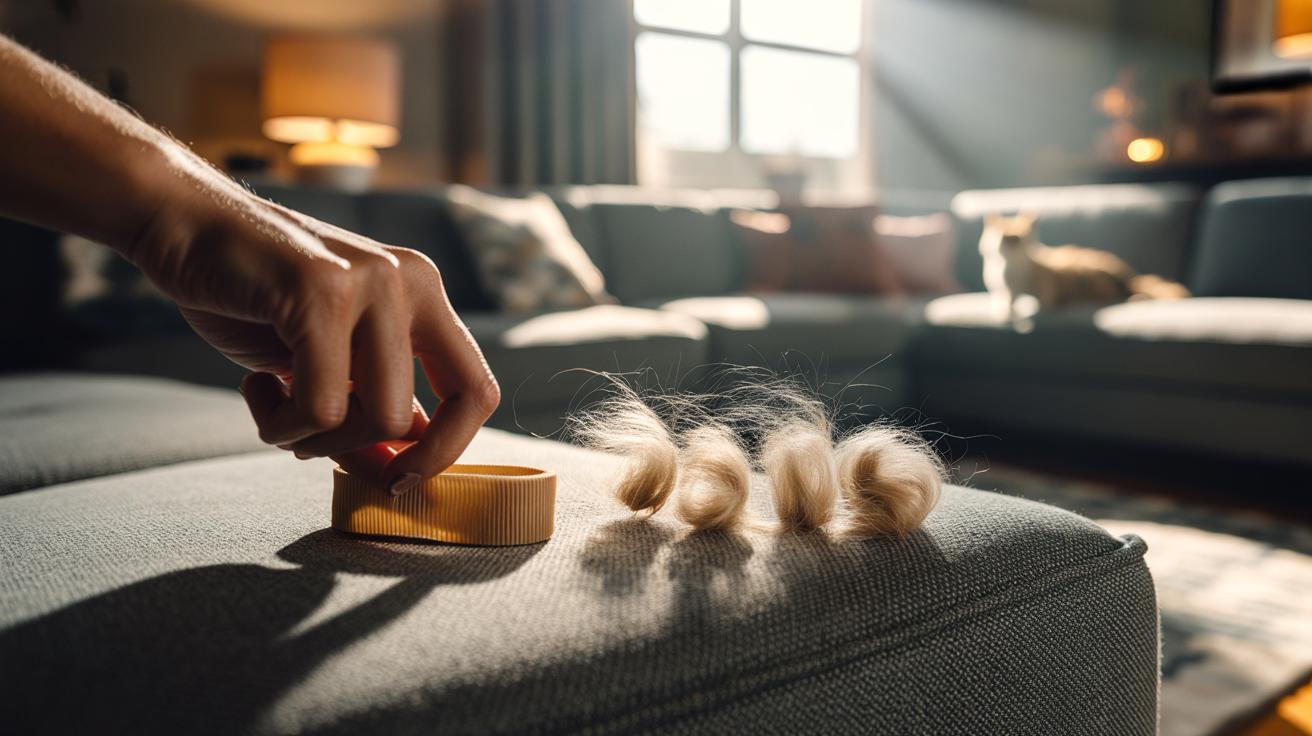
Pet fur gets everywhere. On cushions, car seats, even the lampshade you swore you dusted yesterday. Here’s the quietly brilliant fix: a single rubber band. No batteries. No pricey gadget. Just tacky natural rubber that corrals pet hair into tidy clumps you can lift in seconds. The trick relies on friction and a mild static charge that loosens strands from fabric without soaking your sofa. It’s fast. It’s satisfying. And it turns a woolly mess into neat, vacuum-ready rolls almost instantly. I tested it across a London flat full of cat hair. The results? Surprisingly clean surfaces, with almost zero faff.
Why a Simple Rubber Band Lifts Pet Hair So Fast
Natural rubber is slightly sticky to the touch, and that matters. When you glide a taut rubber band over fabric, the band’s micro-rough surface snags stray fibres while building a gentle static charge. Those two forces work together to lift, clump, and release strands from upholstery pile. Think of it as a mini squeegee for fluff. On dense weaves—polyester sofas, car upholstery, wool throws—the effect is immediate. Hair gathers into visible ropes in a few sweeps, ready to be pinched off and binned.
Crucially, you’re not grinding hair deeper as some brushes do. You’re skimming the surface with deliberate, short motions. Rubber bends around seams and piping, getting into those annoying creases where fur accumulates. The method doesn’t rely on moisture or detergents, so colours don’t bleed and cushions dry instantly. For most day-to-day de-furring, it beats hauling out a vacuum for a small patch, and it doesn’t produce the constant waste of disposable lint sheets. Keep a wide band in a drawer and you’re always armed.
Step-By-Step Method for Sofas, Chairs, and Carpets
Grab a wide, flat rubber band—stationery size No. 64 or similar works well. Loop it over your fingers so it lies flat across your fingertips, or stretch it around a folded piece of microfibre cloth for extra grip. Hold the fabric taut with your other hand. Use short, downward strokes, 5–10 cm at a time, keeping light, even tension. Angle your wrist so the edge of the band just kisses the surface. As hair clumps, lift it away and tap the band against the bin rim, or wipe it on a damp corner of the cloth. Rotate the band periodically so a clean section contacts the fabric. Small strokes beat big sweeping arcs; control is everything.
Finish by vacuuming the gathered clumps to stop them drifting back. On carpets or car mats, stretch the band around a small paint roller or a squeegee handle to cover wider areas quickly. For delicate textiles, place the band over the cloth rather than direct contact. Here’s a quick guide for common surfaces.
| Surface | Band Placement | Motion | Notes |
|---|---|---|---|
| Polyester sofa | Direct on fingers | Short strokes, one direction | Excellent clumping; low risk |
| Wool throw | Over microfibre cloth | Feather-light passes | Protects fibres from pilling |
| Car seats | Around mini roller | Firm, overlapping lines | Fast coverage on flat panels |
| Velvet | Over microfibre cloth | With the nap only | Test a hidden patch first |
Where It Works Best — And When Not to Use It
Rubber excels on tight to medium weaves. Standard upholstery, car interiors, canvas, denim slipcovers, even stair runners. You’ll get quick wins on pet beds and door mats too. For shag pile rugs, it’s more of a pre-treatment—clump the obvious hair, then vacuum deeply. Avoid direct use on delicate silk, antique tapestries, or open knits where loops can snag. If in doubt, test a small spot inside a cushion zip seam. On leather and faux leather, place the band over a soft cloth to prevent micro-scuffing. Never stretch a gritty band across glossy surfaces; dust acts like sandpaper.
There are personal considerations. If you have a latex allergy, use silicone bands or a rubber-free elastic. Replace bands that have hardened or cracked; fresh rubber grips better and sheds less. Store them away from heat and sunlight to preserve elasticity. If the fabric pills easily, lighten your touch or switch to a microfibre-wrapped method. And remember: the band is a maintenance hero, not a deep-clean substitute. Combine with a weekly vacuum and the occasional professional wash for the best long-term look of your furniture.
Smart Add-Ons and Time-Saving Variations
Make it modular. Stretch several bands around a small paint roller sleeve to create a DIY fur drum that covers cushions in half the time. For stairs, loop a band around a plastic card scraper to form a mini squeegee that hugs edges and nosings. Pet travel blanket in the boot? Keep a wide band clipped to the sun visor and clear the worst before you reach home. A lightly damp microfibre under the band adds heft on stubborn fibres, while a spritz of anti-static spray after cleaning slows reattachment on synthetic sofas. Pairing with a handheld vacuum is gold: band to clump, vacuum to finish. The rhythm is quick, calm, effective.
Waste is minimal. One reusable band can replace dozens of lint sheets in a month, and it slips into a pocket or caddy without fuss. House-proud renters, busy families, pet sitters between appointments—this is the tidy-up tactic that fits a life lived fast. Keep the habit, and cushions stop looking like costumes for moulting season.
In a world of gadgets that promise miracles, it’s refreshing when a humble rubber band quietly delivers. You get instant results, almost no mess, and a method that respects your fabrics. From sofas to car upholstery, it turns a hairy chore into a two-minute reset you might actually enjoy. Ready to try it tonight—band on fingers, short strokes, quick bin tap—and see those clumps appear like magic? What corner of your home would benefit most from a 60‑second de-fur, and how will you adapt the technique to your own textures and routines?
Did you like it?4.6/5 (21)