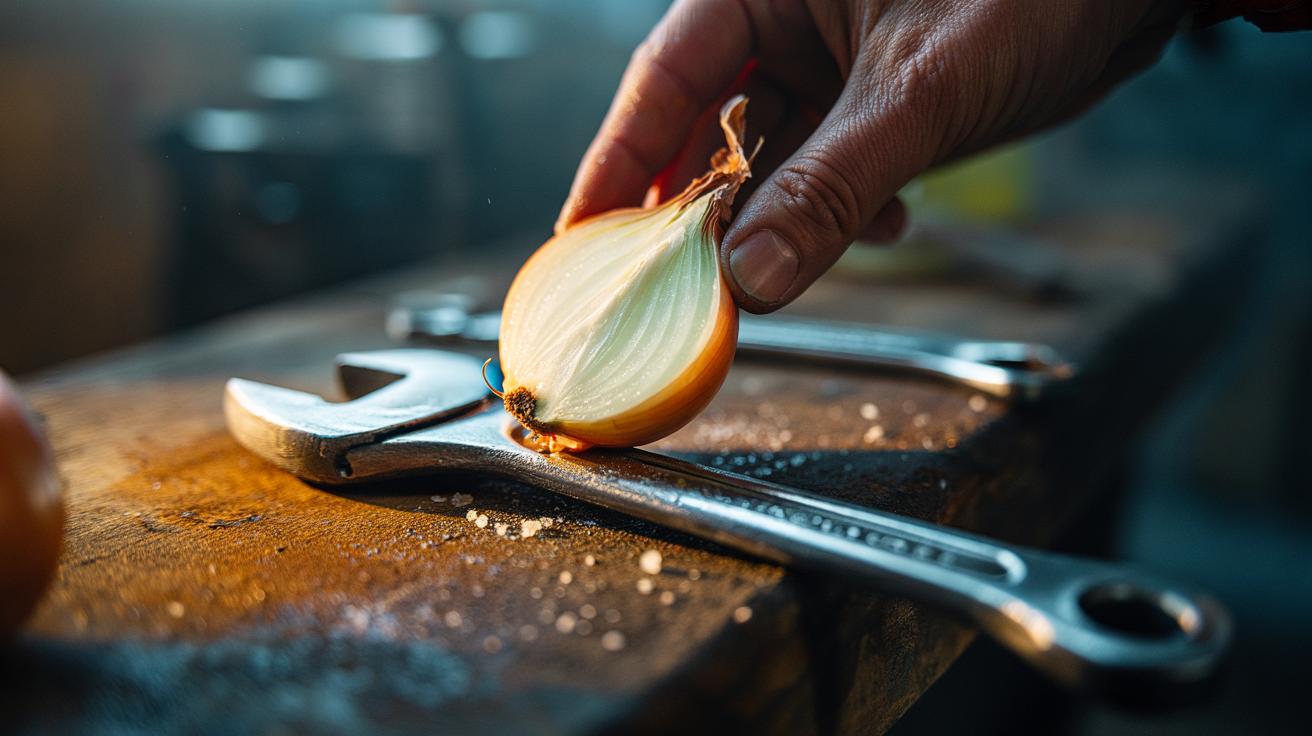
In a nutshell
- 🧅 Harness onion enzymes (alliinase → sulfenic acids/thiosulfinates) to loosen iron oxide, delivering fast results on light rust—often in about 10 minutes.
- ⏱️ Simple method: cut onion, add a touch of salt, scrub 30–60 seconds, let sit 5–8 minutes, scrub again, wipe clean, then dry thoroughly and oil steel surfaces.
- 🧪 Comparisons: faster and gentler than long vinegar soaks, less odorous than some acids, and quicker than bicarbonate pastes; lemon is safe but usually slower.
- ⚠️ Safety and limits: avoid seasoned cast iron, flaking chrome, and electronics; test discreetly, wear gloves if sensitive; suited to surface rust, not deep pitting.
- 🔧 Aftercare: remove residue, dry completely, apply a light oil, and store tools away from damp to stop rust returning.
Rust looks permanent. It isn’t always. In British sheds and under kitchen sinks, a humble onion can out-perform pricier gels on small, surface stains. Slice, scrub, wait, wipe—done. The trick is enzymatic chemistry that switches on the moment you cut the bulb. Those reactions create reactive sulphur compounds and gentle acids that can loosen iron oxide without harsh fumes or heavy sanding. For light flash rust, the effect is fast—often within 10 minutes. You still need a little elbow grease and the right technique, but the science is sound, the materials are cheap, and the method is surprisingly kind to metal.
What Makes an Onion Eat Rust?
When you slice an onion, plant cell compartments rupture and release alliinase, an enzyme that converts sulphur-containing amino acids into sulfenic acids and related thiosulfinates. These are reactive, slightly acidic compounds. Combined with the onion’s natural moisture, they begin to complex and loosen iron ions at the surface of rust (iron oxides). Meanwhile, the onion’s fine fibres and, if you add a pinch of table salt, very mild abrasion help lift the oxide film. It’s a three-part action—enzyme-triggered chemistry, acidity, and gentle scrubbing—that dislodges light corrosion fast.
In simple terms: rust is brittle and porous; the onion’s chemistry seeps in and undermines its grip. On chrome-plated fixtures, garden shears, and light staining on carbon steel, this often works within minutes because the oxide layer is thin. On thick, pitted corrosion, it won’t. There’s no miracle. But there is an elegant, household-level intervention that can spare you harsher acids. Used quickly after spotting orange bloom, the onion method prevents deeper damage and the cycle of repeated sanding.
Step-By-Step: Remove Rust in 10 Minutes
Cut a fresh onion in half across the middle, exposing a broad, juicy face. Dust the rusty area with a little fine salt if the metal can tolerate minimal abrasion; it acts like micro–scouring beads. Rub the cut face over the stain in short circles for 30–60 seconds. You’ll see the onion surface brown; that’s oxide transfer and plant compounds reacting. Re-slice a wafer-thin layer to refresh the active, enzyme-rich face. Leave a wet film for 5–8 minutes so the chemistry can work.
Return and rub again with moderate pressure. For crevices, press onion fibres into the seam with a soft toothbrush or cloth. Wipe away residue with a damp microfibre cloth, then dry thoroughly. If steel, finish with a drop of light oil to inhibit re-rusting. For kitchen gear, hand-wash with mild soap and dry. Repeat once if ghosting remains. Important caveats: do not use on unsealed cast-iron seasoning (it can strip it), electronics, or plated items with flaking chrome. Test on an inconspicuous spot first, particularly with antiques or lacquered finishes.
How It Compares With Vinegar, Lemon, and Bicarbonate
Household acids and alkalis also tackle rust, but they differ in speed, smell, and metal safety. The onion is unusual because its enzyme-triggered compounds are made fresh at the cut surface; that’s why a newly sliced face outperforms a dried one. Vinegar (acetic acid) bites quickly but can undercut plating and leave blackening on some steels. Lemon adds citric acid and a nicer odour but needs longer dwell time. Bicarbonate pastes are gentle and safe, yet slower without added acidity. For a quick, targeted clean of small patches, onion strikes a balance of speed, control, and mildness.
| Method | Typical Time | Metal Safety | Odour | Best For |
|---|---|---|---|---|
| Onion + Salt | 5–10 min | Good on light rust | Mild, short-lived | Spot fixes on tools, taps |
| Vinegar Soak | 30–120 min | Can etch/plating risk | Strong | Loose parts, heavy bloom |
| Lemon + Salt | 20–60 min | Generally safe | Fresh | Kitchen metals, chrome |
| Bicarbonate Paste | 20–60 min | Very safe, gentle | Neutral | Delicate finishes |
Note that all methods demand thorough drying and, where appropriate, a protective oil film afterwards. Rust returns fast if moisture lingers.
Safety, Limitations, and When to Skip This Hack
Onions are food-safe, but that doesn’t mean risk-free for metals. Avoid prolonged contact on high-carbon blades you treasure; moisture can flash-stain if you forget to dry. For stainless steel, check manufacturer guidance—chlorides in salt may aggravate pitting if left on too long. Wear gloves if you have sensitive skin; onion juices can irritate. Keep plant pulp away from electrical housings, hinges packed with grease, and porous finishes. If chrome is already peeling, chemical loosening might lift more plating—stop and reassess.
Think about context. For a bike chain, chemistry is only half the job; degrease, de-rust, then lubricate properly. For garden shears, clean, dry, and store off damp floors. With cookware, consider the surface: enamel and stainless tolerate brief contact; seasoned cast iron does not. Dispose of onion pulp in food waste, and clean tools to remove lingering sulphur odour. Above all, set expectations: this is a light-rust solution, not a replacement for electrolysis, naval jelly, or abrasive refinishing on deep corrosion. If pitting exposes raw metal, move to heavier-duty methods and rust converters.
An onion won’t reverse years of neglect, but it excels at interrupting rust early, cheaply, and with a disarming simplicity that invites you to act before stains spread. The underlying story is elegant chemistry turned domestic: fresh enzymes, reactive sulphur, a dash of salt, and patience measured in minutes. Use it for taps, spanners, and the orange freckles that appear after a rainy weekend. Then finish with dryness and protection, the real long-term fix. Will you try the onion test on your next rust spot, or do you swear by a different quick fix that beats the clock?
Did you like it?4.5/5 (28)